
Environmental and Seasonal Influence on Mosquito Infestation
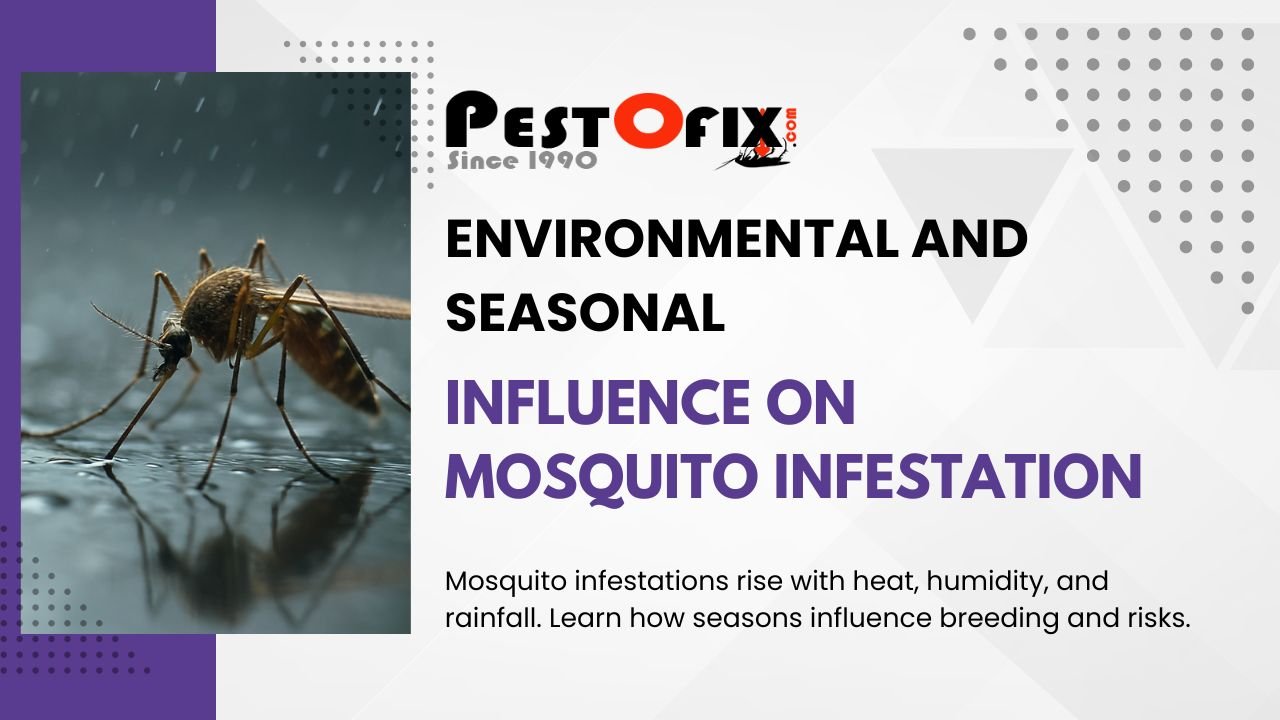
The hum of a mosquito is more than a mere nuisance; it is the sound of one of the planet's most effective vectors of disease. Across the globe, mosquitoes are responsible for transmitting pathogens that cause hundreds of millions of illnesses and hundreds of thousands of deaths annually, with diseases like malaria, dengue, chikungunya, Zika, and West Nile fever posing significant public health challenges. The persistence and proliferation of these insects are not random occurrences but are intricately tied to the environment. Mosquitoes are, in essence, biological barometers, exquisitely sensitive to shifts in temperature, patterns of rainfall, and levels of humidity. Their entire life cycle—from egg to larva to pupa to adult—is governed by these abiotic factors. Consequently, understanding the nuanced relationship between mosquito population dynamics and seasonal environmental trends is not merely an academic exercise; it is a critical component of modern public health strategy. By decoding the environmental cues that lead to population explosions, we can transition from a reactive stance—combating outbreaks after they begin—to a proactive one, implementing targeted, timely, and effective prevention and control measures to safeguard communities. This deep dive explores the fundamental principles of mosquito ecology, the specific impacts of temperature, rainfall, and seasonality, the amplifying role of urban environments, and the comprehensive strategies required to mitigate the risks they pose.
1. The Foundational Science: Temperature and Climate Influence
At the core of mosquito biology lies a profound dependence on thermal conditions. Mosquitoes are ectothermic, or "cold-blooded," organisms, meaning their internal body temperature and, by extension, their metabolic processes, are regulated by the external environment. This makes temperature the single most critical factor influencing their development, survival, and ability to transmit disease. The relationship is often described as a thermal optimum, a Goldilocks zone where conditions are neither too cold nor too hot for their biological functions to proceed efficiently. For the majority of medically significant species, such as Aedes aegypti (the primary vector for dengue, Zika, and chikungunya) and Anopheles gambiae (a major malaria vector), this optimal range lies between 25°C and 35°C. Within this band, their physiological processes operate at peak performance.
- Accelerated Life Cycles in Warm Climates: The effect of temperature on the mosquito life cycle is quantifiable and dramatic. The period from a female mosquito laying her eggs to those eggs developing into larvae, then pupae, and finally emerging as flying adults is known as the gonotrophic cycle. In cooler temperatures, around 15°C, this cycle can stretch to several weeks, severely limiting the number of generations a population can produce in a single season. However, as temperatures rise into the optimal 25-35°C range, this development time contracts significantly. Research has shown that for every 1°C increase in temperature within this range, the larval development time can decrease by about 10-15%. At 30°C, eggs can hatch into larvae in a matter of days, and the entire aquatic development phase from egg to adult can be completed in under a week. This rapid turnover allows mosquito populations to explode with astonishing speed, leading to a high population density in a short period and dramatically increasing the potential for disease transmission.
- Pathogen Development Within the Mosquito: Perhaps even more critical than the development of the mosquito itself is the development of the pathogens it carries. The parasites and viruses that cause diseases like malaria and dengue require an incubation period within the mosquito—known as the extrinsic incubation period (EIP)—before they can be transmitted to a new human host through a bite. This process is also intensely temperature-sensitive. For the Plasmodium parasite that causes malaria, the EIP can be as long as 16-18 days at 20°C. However, at 25°C, it shortens to around 10-12 days, and at 30°C, it can be as brief as 8-9 days. A shorter EIP means a higher proportion of the mosquito population will survive long enough to become infectious. This exponentially increases the vectorial capacity—a measure of the mosquito's efficiency in transmitting a pathogen—and turns warm temperatures into a powerful catalyst for epidemics.
- The Limits of Heat and the Dormancy of Cold: While warmth is beneficial, extreme heat becomes detrimental. Sustained temperatures above 35-40°C can be lethal to both adult mosquitoes and their aquatic larvae, desiccating their habitats and shortening the average adult mosquito's lifespan. If a mosquito dies before the completion of the extrinsic incubation period, it never becomes a transmitter of disease. Conversely, as temperatures drop below 15°C, mosquito metabolism slows dramatically. Flight activity ceases, blood-feeding becomes infrequent, and reproduction halts. In response to the onset of cooler or drier seasons, many mosquito species have evolved survival mechanisms. Some, like certain Anopheles species, enter a state of reproductive diapause, while others, like many Culex species, overwinter as mated females, sheltering in protected microhabitats like culverts, basements, or animal burrows. Their eggs, particularly those of Aedes species, can be incredibly resilient, surviving for months in a desiccated state on dry container surfaces, only to hatch when the next rains arrive and temperatures become favorable again.
2. The Catalyst for Proliferation: Rainfall and Standing Water
If temperature sets the metabolic pace for mosquitoes, then rainfall provides the very stage upon which their life cycle plays out. The intimate link between female mosquitoes and standing water is absolute; it is the non-negotiable requirement for the continuation of their species. After obtaining a blood meal, which provides the protein necessary for egg development, a female mosquito must seek out a suitable aquatic habitat in which to deposit her clutch of dozens to hundreds of eggs. The nature, quantity, and distribution of these water bodies, all dictated by precipitation patterns, directly determine the scale and geographic scope of mosquito breeding. This relationship, however, is not always a simple case of "more rain equals more mosquitoes." The timing, intensity, and type of rainfall create a complex interplay that shapes mosquito ecology in predictable ways.
- The Ideal of Light Rains and Human-Made Containers: For container-breeding mosquitoes like Aedes aegypti and Aedes albopictus (the Asian tiger mosquito), light to moderate rainfall is often the most productive. These species are notoriously synanthropic, living in close association with humans, and have evolved to exploit the myriad of small, artificial water-holding containers that litter our urban and peri-urban environments. A brief shower is sufficient to fill plant saucers, discarded tires, buckets, children's toys, and clogged roof gutters, creating perfect, predator-free nurseries for their larvae. These small, scattered habitats are often overlooked in control efforts, making them a persistent source of infestation. The clarity and cleanliness of this water are less important than one might assume; many mosquito larvae thrive in organically rich water, feeding on bacteria and microorganisms.
- Heavy Monsoons and Floodwater Breeding: In contrast, other species are classified as "floodwater" mosquitoes. Genera like Culex and certain Anopheles species breed in larger, more permanent bodies of water such as marshes, irrigated agricultural fields, and most significantly, the transient pools created by heavy rainfall and flooding. Monsoon seasons or periods of intense cyclonic activity can trigger massive, synchronized emergences of these species. Flooded fields, overflowing drains, and waterlogged construction sites become vast breeding grounds, capable of producing millions of mosquitoes in a single area. This often leads to a dramatic spike in mosquito populations and a corresponding increase in the transmission of diseases like Japanese encephalitis (spread by Culex mosquitoes) and malaria. However, if the rains are excessively heavy and persistent, they can also have a flushing effect, washing away larvae and eggs from their habitats and temporarily suppressing populations, only for them to rebound as the floodwaters recede and stabilize.
- The Paradox of Drought and Urban Water Storage: Interestingly, drought conditions can also inadvertently foster mosquito breeding, particularly of the Aedes species. When municipal water supplies become unreliable, households often resort to storing water in large containers, tanks, and drums. If these storage vessels are not properly sealed, they become prime real estate for female mosquitoes to lay their eggs. Furthermore, during dry spells, communities may be less vigilant about emptying small containers, assuming the lack of rain means no breeding risk, allowing forgotten water sources to become stagnant and highly productive. This creates a paradox where both excessive rainfall and a lack thereof can lead to significant mosquito problems, underscoring the need for year-round vigilance and adapted control strategies.
3. The Annual Cycle: Seasonal Mosquito Activity and Disease Peaks
The interplay of temperature and rainfall manifests in distinct seasonal patterns of mosquito activity, which in turn dictate the temporal risk of disease outbreaks. While these patterns vary by geographic region and local climate, a general framework can be applied to many tropical and subtropical areas, particularly those with a pronounced monsoon season. Tracking this annual cycle is essential for health authorities to allocate resources effectively and for the public to understand periods of heightened personal risk.
- Pre-Monsoon (Late Spring/Summer): The Building Pressure: As winter recedes and temperatures begin to climb steadily, mosquito activity stirs from its seasonal lull. The increasing warmth accelerates the development of overwintering eggs and the metabolism of dormant adults. During this pre-monsoon period, which is often characterized by hot, dry weather, the primary breeding sites are those that are human-managed or accidental. Water storage containers, overhead tanks (especially those with cracked lids), and air conditioner runoff trays become critical breeding hubs. This is the phase where the foundational mosquito population for the coming peak season is established. Public health efforts during this time, focused on source reduction—the elimination of these container habitats—are disproportionately effective, as they prevent the initial population boom that can lead to an uncontrollable epidemic later.
- Monsoon (Summer/Rainy Season): The Peak Infestation: The arrival of the monsoon marks the crescendo of mosquito breeding. The combination of high temperatures, abundant rainfall, and soaring humidity creates near-perfect conditions. Humidity is a crucial, often underappreciated factor; it prevents the desiccation of adult mosquitoes, allowing them to live longer and take more blood meals. The landscape becomes saturated with breeding sites, from natural puddles and ditches to the plethora of containers filled by the rain. Population densities reach their annual zenith. While the sheer number of mosquito bites increases dramatically, this period is not always the absolute peak for disease transmission for all illnesses, as the pathogen incubation period within the mosquito creates a slight lag.
- Post-Monsoon (Early Autumn): The Epidemic Period: Arguably the most dangerous time of the year for mosquito-borne disease is the immediate post-monsoon period. The rains have ceased, but the landscape remains dotted with persistent pools of stagnant water in drains, construction sites, and blocked waterways. The weather remains warm, but the relentless rains have passed. The massive mosquito population that emerged during the monsoon has now had time to process the pathogens they may have picked up from infected individuals. The extrinsic incubation period has been completed for a significant portion of the vector population. Consequently, the ratio of infectious mosquitoes to susceptible humans hits its annual peak. This is why cities across Southeast Asia and the Indian subcontinent consistently report their highest numbers of dengue, chikungunya, and malaria cases in the weeks and months following the retreat of the monsoon rains.
- Winter: The Seasonal Reprieve and Strategic Opportunity: As temperatures drop, mosquito activity declines sharply. Adult mosquitoes die off, and breeding grinds to a halt in most outdoor habitats. However, it is a mistake to believe the threat has vanished. In milder winters, or within warm microclimates of urban areas, low-level transmission can persist. More importantly, this is a period of strategic opportunity. It is the ideal time for communities and municipalities to engage in intensive "clean-up" drives, removing the containers and clearing the debris that will become next year's breeding sites. It is also the time for repairing drainage infrastructure and conducting larviciding in permanent water bodies that cannot be drained, actions that are far more effective when undertaken proactively rather than reactively in the midst of an outbreak.
4. The Human Amplifier: Urban and Environmental Factors
While climate provides the foundational conditions for mosquito proliferation, human activity and the modification of our environment have profoundly amplified the problem. The rapid and often unplanned growth of cities has created a new, highly productive ecosystem tailored to the needs of certain mosquito species. The urban environment, with its unique characteristics, acts as a force multiplier, intensifying the natural seasonal trends and expanding the geographical range of these disease vectors.
- The Built Environment as a Mosquito Nursery: Modern cities are essentially complex networks of potential mosquito breeding sites. Construction sites, with their excavated pits, foundation trenches, and discarded materials like cement blocks and tarpaulins, are notorious for collecting rainwater. Poorly maintained urban infrastructure, such as clogged storm drains and broken sewer lines, creates permanent or semi-permanent stagnant water bodies. Even the design of our homes—with ornamental plant pots, bird baths, and poorly sealed water tanks—contributes to the problem. This "urban morphology" provides a diverse and abundant portfolio of habitats that allow mosquito populations to persist and thrive independently of natural water bodies.
- Waste Management and Larval Nutrition: Improper solid waste management is a critical driver of urban mosquito issues. Discarded plastic containers, packaging, used tires, and other junk provide the physical vessels for water collection. Furthermore, this organic waste, as it decomposes in water, releases nutrients that fuel the growth of bacteria and microorganisms, which are the primary food source for mosquito larvae. A nutrient-rich habitat leads to larger, healthier larvae that develop faster and emerge as more robust adults, increasing their chances of survival and reproduction. The proximity of these waste sites to human dwellings ensures a short flight path for newly emerged mosquitoes to find their first blood meal.
- Climate Change and the Expanding Habitat: The overarching threat of climate change is fundamentally altering the landscape of mosquito-borne disease. Rising global average temperatures are lengthening the annual window for mosquito breeding. Seasons that were once too cool are now becoming permissive, allowing for more generations of mosquitoes per year. Perhaps more significantly, warmer temperatures are enabling the northward and southward expansion of mosquito species from the tropics into temperate regions. The spread of Aedes albopictus across Europe and North America is a stark example of this phenomenon. Furthermore, climate change is increasing the frequency and intensity of extreme weather events. More severe floods create more extensive and longer-lasting breeding sites, while more frequent droughts drive the increased water storage that benefits container breeders. The "urban heat island" effect, where cities are significantly warmer than their surrounding rural areas, further exacerbates this by creating localized hotspots where mosquitoes can remain active for longer periods within the year.
5. A Multi-Pronged Defense: Preventive Environmental Strategies
Given the complex and multifaceted nature of the mosquito problem, a single, silver-bullet solution does not exist. Effective prevention requires an integrated approach that combines environmental management, biological and chemical controls, community engagement, and personal protection. The most sustainable and cost-effective strategies are those that focus on the source: eliminating the opportunities for mosquitoes to breed in the first place.
- Source Reduction: The Cornerstone of Control: This is the most critical and effective long-term strategy. It involves the systematic identification and elimination of mosquito breeding habitats. At the household level, this means weekly inspection and emptying of water from flower pots, pet dishes, buckets, and toys. Water storage containers like drums and tanks must be fitted with tight-fitting lids or mesh screens. At the community level, this requires organized clean-up drives to remove discarded tires, containers, and other junk from empty lots and public spaces. Municipal authorities must prioritize the regular cleaning and maintenance of storm drains, ditches, and canals to ensure free water flow and prevent stagnation.
- Larviciding: Targeting the Aquatic Stage: For bodies of stagnant water that cannot be drained, such as ornamental ponds, septic tanks, and certain construction sites, the application of larvicides is a vital tool. These are insecticides specifically targeted at the larval stage of the mosquito. Modern larvicides include biological agents like Bacillus thuringiensis israelensis (Bti), a bacterium that is toxic only to mosquito and black fly larvae and is harmless to humans, pets, and other wildlife. Other options include insect growth regulators (IGRs) that prevent larvae from maturing into adults. Larviciding is a proactive measure that stops the problem before the mosquitoes can even fly and bite.
- Adult Control and Personal Protection: During periods of high adult mosquito activity or in the midst of an outbreak, measures to kill adult mosquitoes (adulticiding) may become necessary, typically through targeted fogging or spraying. However, this is a reactive approach and should not be the first line of defense. For personal protection, the use of insect repellents containing DEET, Picaridin, or Oil of Lemon Eucalyptus on exposed skin is highly effective. Wearing long-sleeved shirts and long pants, especially during peak biting hours (often dawn and dusk), provides a physical barrier. Installing and maintaining intact window and door screens, and using mosquito nets over beds, are simple yet powerful ways to create bite-free environments indoors.
- Community-Wide Participation and Public Education: No government program can inspect every backyard or balcony. Ultimately, the success of mosquito prevention hinges on an informed and engaged citizenry. Public education campaigns that clearly explain the link between standing water and disease, and that demonstrate simple preventive actions, are indispensable. Community-based programs, where neighbors work together to inspect and clean their shared environment, can create a collective immunity, reducing the mosquito population across a wider area than any single household could achieve alone. This shared responsibility transforms mosquito control from a governmental task into a community-wide ethic.
Conclusion: An Ecological Understanding for a Healthier Future
The challenge posed by mosquitoes is a persistent and evolving one, deeply rooted in the fundamental principles of ecology. Mosquito infestations and the diseases they carry are not random calamities but direct consequences of environmental and seasonal conditions. Warm, humid, and rainy periods create the ideal metabolic and reproductive environment for these insects, leading to population surges that drive the transmission of pathogens. The problem is further intensified by human activities, from unplanned urbanization and inadequate waste management to the global phenomenon of climate change, which is expanding the geographical and temporal boundaries of risk. However, this ecological understanding also provides the blueprint for an effective defense. By moving beyond a simplistic "spray and pray" approach and embracing a holistic strategy centered on environmental management—controlling water stagnation, improving urban sanitation, and implementing regular, targeted larval source reduction—we can dismantle the very foundation of the mosquito life cycle. Combined with community-wide participation and informed personal protection, these measures empower households and municipalities alike to drastically reduce mosquito populations. In doing so, we can mitigate the profound health risks they pose and build more resilient communities, capable of breaking the cycle of transmission and safeguarding public health in a changing world.
No comments yet — be the first!