
How Termite Infestations Begin in Buildings
Introduction: Understanding the Origin of Termite Infestations
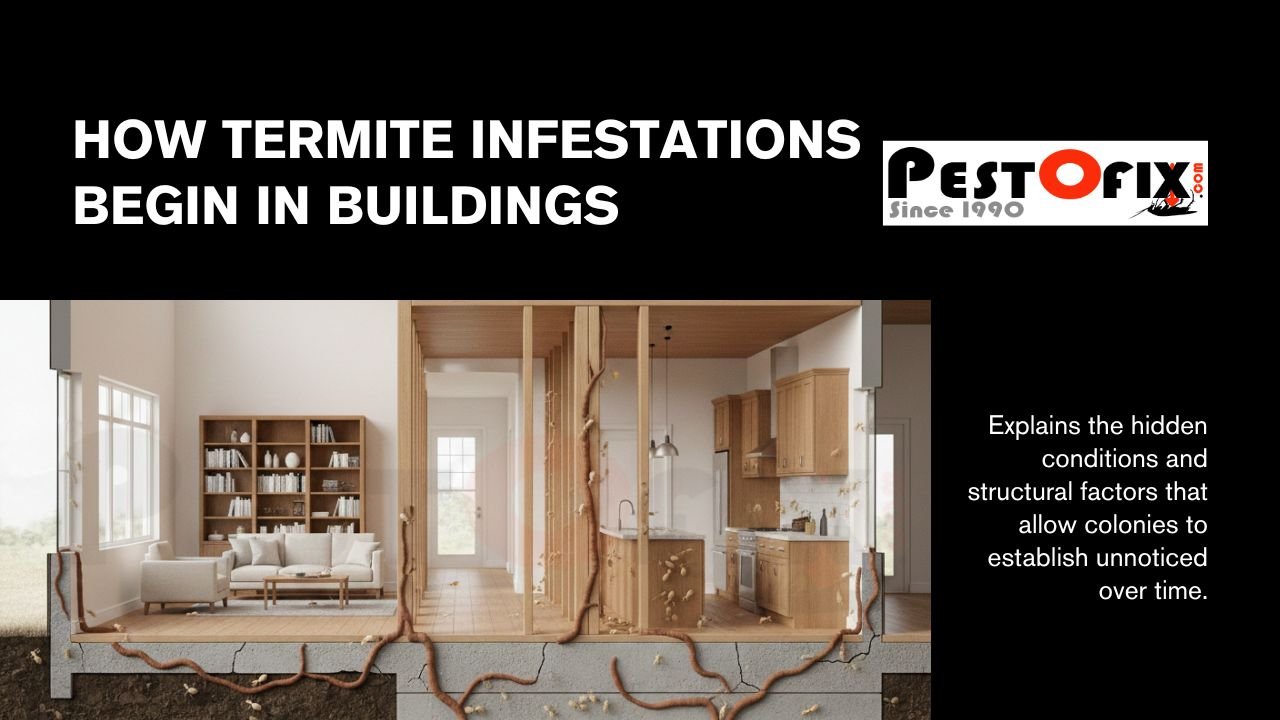
Termite infestations do not begin suddenly, nor do they appear without cause. In most buildings, termite activity develops gradually, often over months or years, before becoming visible or noticeable to occupants. Understanding how termite infestations begin is essential for recognising why early activity is so difficult to detect and why damage often appears unexpectedly.
Unlike surface pests that enter buildings through open access points, termites operate primarily from concealed environments. Their connection to soil, moisture, and structural wood allows them to establish colonies in ways that remain hidden from everyday observation. This guide explains how termite infestations originate in buildings, focusing on environmental conditions, construction design, and behavioural patterns that allow termites to enter and remain undetected.
The Natural Habitat of Termites and Its Connection to Buildings
Termites are soil-dwelling insects by nature. Their natural environment exists beneath the ground surface, where they build extensive networks of tunnels that protect them from light, predators, and environmental exposure. These underground systems allow termite colonies to access food sources without being exposed to open air.
Buildings unintentionally provide an extension of this natural habitat. When construction introduces wood, moisture, and soil contact into a single structure, it creates conditions that closely resemble the termite’s original environment. This similarity is one of the primary reasons termite infestations begin in buildings rather than being random or accidental events.
Soil Contact as the Primary Starting Point
Most termite infestations begin where a building maintains direct or indirect contact with soil. Termites rely on soil not only for movement but also for maintaining humidity levels necessary for survival. Any structural element that connects wood to soil becomes a potential entry point.
Foundation and Ground-Level Contact
Foundations, plinths, and ground slabs often create continuous contact between soil and structural elements. Even when concrete barriers exist, small gaps, joints, or cracks can allow termites to move upward from the soil into the structure.
- Foundation walls with soil exposure
- Expansion joints and construction gaps
- Cracks formed due to settling or ageing
- Soil-filled cavities near plinth levels
Wood-to-Soil Connections
Wooden elements that touch or remain close to soil significantly increase infestation risk. This includes door frames, wooden supports, temporary construction materials, and stored wood placed near building perimeters.
- Wooden door frames installed near ground level
- Temporary wooden supports left after construction
- Stored timber in basements or crawl spaces
- Garden structures attached to buildings
Construction Practices That Enable Termite Entry
The way a building is designed and constructed plays a critical role in how termite infestations begin. Certain construction practices unintentionally create concealed pathways that termites can exploit without being noticed.
Concealed Structural Voids
Modern construction often includes hidden cavities within walls, floors, and ceilings. These voids provide protected spaces where termites can move freely without exposure.
- Hollow walls and cavity partitions
- False flooring systems
- Service ducts and utility shafts
- Lift pits and basement voids
Expansion Joints and Structural Gaps
Buildings expand and contract due to temperature and load variations. Expansion joints accommodate this movement but can also create narrow gaps that termites use as access routes.
- Expansion joints between slabs
- Construction seams between materials
- Pipe and conduit penetrations
- Unsealed junctions between walls and floors
The Role of Moisture in Initiating Infestations
Moisture is a critical factor in how termite infestations begin. Termites require a humid environment to survive, and buildings often provide consistent moisture sources that remain unnoticed.
Plumbing and Water Systems
Hidden plumbing lines can leak slowly over time, creating damp zones within walls and floors. These areas become ideal environments for termites to establish activity without detection.
- Leaking pipes inside walls
- Condensation around drainage systems
- Bathroom and kitchen plumbing lines
- Water seepage beneath flooring
Environmental and Seasonal Moisture
Seasonal changes, rainfall, and humidity fluctuations contribute to soil moisture levels around buildings. Prolonged moisture retention near foundations supports termite movement and survival.
- Rainwater accumulation near foundations
- Poor drainage around buildings
- Water retention in landscaped areas
- High humidity in enclosed spaces
How Termites Establish Initial Feeding Zones
Once termites gain access to a building, they do not immediately spread throughout the structure. Infestations begin with the establishment of small feeding zones, usually located in concealed and undisturbed areas.
Selection of Feeding Locations
Termites select feeding areas based on safety, moisture, and availability of cellulose. These areas are rarely visible to occupants during early stages.
- Inside wall cavities
- Beneath fixed flooring
- Within wooden frames and supports
- Behind built-in cabinetry
Gradual Expansion from Initial Zones
As feeding continues, termites expand outward from the initial zone. This expansion happens slowly, often without causing immediate surface damage.
- Progression through connected wood
- Movement along concealed pathways
- Creation of multiple feeding points
- Internal weakening before visible signs
Why Early Termite Activity Goes Unnoticed
One of the defining characteristics of termite infestations is their ability to remain hidden during early stages. This invisibility is not accidental but a result of termite behaviour and building design.
Internal Feeding Behaviour
Termites consume wood from the inside, leaving the outer surface intact. This allows structural elements to appear normal while internal damage progresses.
- Hollowing of wooden components
- Preservation of outer wood layers
- Delayed surface collapse
- Structural weakening without noise
Lack of Immediate Visual Indicators
Unlike other pests, termites do not produce frequent surface signs during early infestation stages. Visible indicators often appear only after significant internal damage has occurred.
- No daily sightings
- No obvious surface debris initially
- No odour or sound in early stages
- Minimal disturbance to living spaces
How Infestations Transition from Early to Established
As time progresses, termite infestations shift from isolated feeding zones to broader structural involvement. This transition is gradual and often misunderstood as sudden when damage becomes visible.
Development of Multiple Feeding Networks
Established infestations involve several feeding zones operating simultaneously. These networks allow termites to access different parts of the structure without surface exposure.
- Multiple internal access routes
- Feeding across walls, floors, and frames
- Redundancy in movement pathways
- Stable colony expansion
Delayed Discovery and Structural Impact
By the time infestation signs become noticeable, internal damage has often reached advanced stages. This delayed discovery contributes to the perception that termite damage appears suddenly.
- Visible damage following internal failure
- Weakening of load-bearing wood
- Surface collapse after prolonged feeding
- Misinterpretation of damage timeline
Key Takeaways: How Termite Infestations Begin
Termite infestations begin quietly and systematically, shaped by soil contact, construction design, moisture availability, and termite behaviour. Buildings that unintentionally replicate the termite’s natural habitat provide ideal conditions for colonies to establish unnoticed.
Understanding these origins helps explain why termite problems are often discovered late and why early awareness is critical for structural protection. By recognising how infestations begin, homeowners, builders, and property managers can better appreciate the importance of monitoring and informed evaluation over assumptions.

No comments yet — be the first!