
Rats and Rodents – Biology, Behavior, Infestation, and Human Coexistence
Introduction
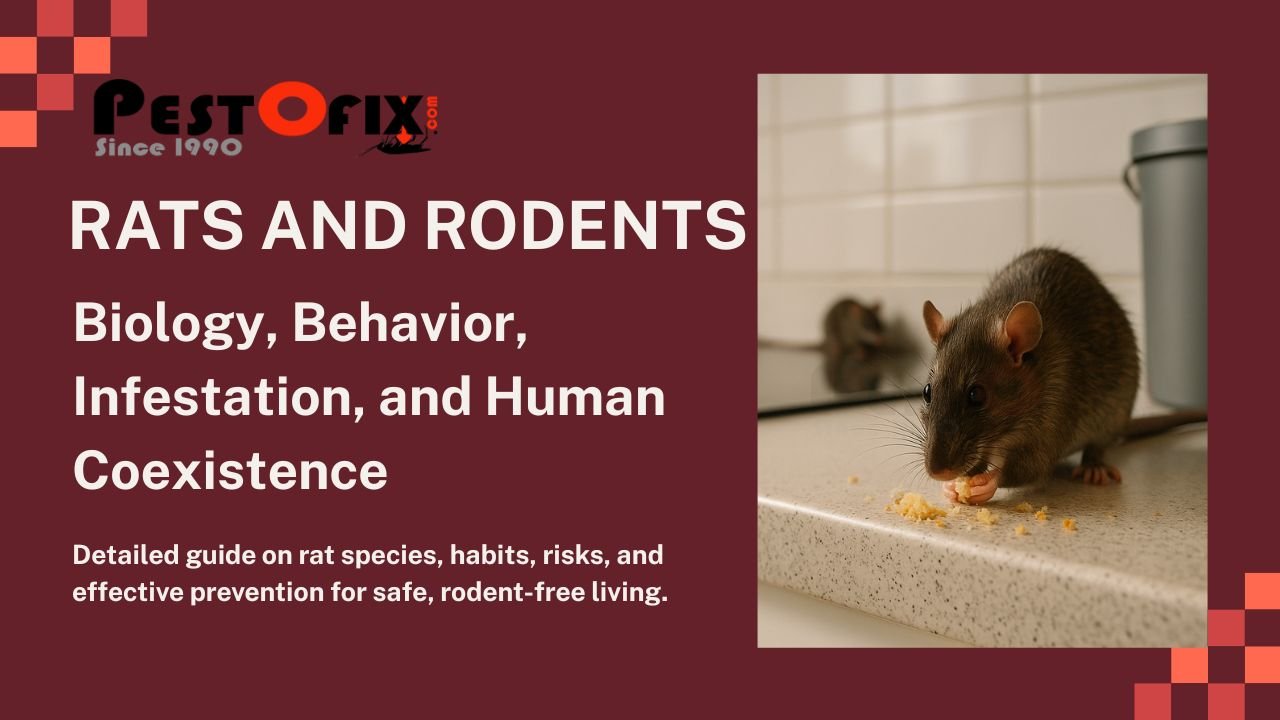
Rats and other rodents are among the most adaptable mammals on Earth. They thrive in nearly every human environment—from farms and warehouses to cities and homes. Their success comes from their intelligence, rapid breeding, and ability to survive on limited resources. While they play a role in natural ecosystems, their presence within human settlements poses serious threats to health, property, and food security.
In most urban areas, rats live in close association with people, relying on accessible food, water, and shelter. Over time, they have become one of the most persistent pests, capable of causing structural damage, contaminating food, and transmitting diseases. Understanding their biology and habits is key to long-term prevention and management.
Common Species Found Near Humans
Only a few of the world’s 2,000+ rodent species live closely with humans. The main species found in Indian cities and towns are:
- House Rat (Rattus rattus): Also called the black or roof rat. It is agile, light-bodied, and commonly found in attics, ceilings, and upper floors.
- Norway Rat (Rattus norvegicus): A large, burrowing rat that lives in basements, sewers, and foundations. It is also known as the brown or sewer rat.
- Bandicoot Rat (Bandicota bengalensis): A large, aggressive rat native to India, usually found near construction sites, drains, and storage areas.
Each of these species has unique habits and preferred nesting areas, but all share a common ability to exploit human-made environments for survival.
Physical Adaptations and Survival Traits
Rats have evolved several physical traits that make them efficient survivors. Their front teeth, known as incisors, never stop growing. To prevent overgrowth, they constantly gnaw on hard materials, including wood, plastic, cables, and even soft metals. This gnawing behavior causes major damage to furniture, wires, and building infrastructure.
They possess strong limbs for climbing and burrowing, sharp senses for detecting danger, and flexible skeletons that allow them to squeeze through openings as small as 2 cm. Their sense of smell and hearing are highly developed, helping them navigate dark, cluttered, and noisy environments with ease.
Reproduction and Growth
Rats reproduce rapidly, making them difficult to control once established. A female rat can give birth to 6–12 pups per litter and can reproduce multiple times per year. In favorable conditions, one pair can multiply into hundreds within a few months.
They usually nest in dark, undisturbed areas close to food sources—behind walls, under floors, in ceilings, or inside storage boxes. This rapid breeding and hidden nesting make early detection critical for preventing large infestations.
Feeding Behavior and Food Sources
Rats are omnivorous and opportunistic eaters. They feed on almost anything—grains, fruits, vegetables, garbage, pet food, or stored goods. Even a small amount of spilled food or waste can support an entire colony. They gnaw through packaging materials, creating contamination risks in food storage and processing facilities.
Unlike many pests, rats store excess food near their nests, which keeps colonies stable even when external food becomes scarce. This behavior is one reason why infestations persist despite irregular cleaning or short-term treatments.
Behavior and Intelligence
Rats are intelligent, cautious, and social. They live in groups and communicate using scent, sound, and body language. Their excellent memory allows them to remember routes, objects, and threats, making them wary of new traps or unfamiliar objects.
They are primarily nocturnal, becoming active during late evening and night hours. Their ability to learn from experience makes traditional control methods less effective if not applied systematically. These behavioral traits make rodent management a complex and specialized task.
Signs of Infestation
Recognizing the signs early helps in effective control. Common indicators of rat or rodent activity include:
- Droppings found near walls, behind furniture, or inside cabinets.
- Gnaw marks on wires, food containers, and wooden structures.
- Scratching or scurrying noises in ceilings, attics, or wall cavities at night.
- Grease marks or trails along walls and baseboards from repeated movement.
- Unusual odors caused by urine or nesting materials.
Any of these signs should prompt inspection before the population grows out of control.
Health and Property Risks
Rats are not just a nuisance—they are known carriers of multiple diseases that can spread through bites, droppings, or contaminated food. Their presence in food storage areas poses serious hygiene and safety risks. In addition, their habit of gnawing electrical wires can cause short circuits, equipment failures, and even fires.
Common problems caused by rat infestations include:
- Food contamination and wastage in homes, restaurants, and warehouses.
- Damage to insulation, packaging, and electrical wiring.
- Weakened walls, ceilings, and wooden furniture due to burrowing.
- Potential disease transmission through contact or contamination.
Habitat Preferences in Urban Areas
Rats thrive wherever food and shelter are available. In cities, they inhabit sewer lines, garbage zones, basements, ceiling voids, and construction gaps. Poor sanitation, leaking pipes, and open drains further increase their population density.
They are also highly mobile—capable of traveling through drainage networks, pipelines, and wall cavities to access new feeding zones. Their population tends to rise during monsoon and winter seasons when outdoor conditions are unfavorable.
Prevention and Long-Term Control
Preventing rodent infestations is more effective than treating them after they occur. A structured approach combining sanitation, physical exclusion, and monitoring is essential.
- Seal cracks, holes, and openings around pipes, drains, and doors.
- Store all dry food and grains in tightly sealed containers.
- Dispose of garbage daily and maintain clean surroundings.
- Repair leaks and remove standing water sources.
- Trim vegetation and eliminate clutter near external walls.
In high-risk areas, regular inspection and preventive baiting by trained professionals help maintain rodent-free premises year-round.
Modern Rodent Management Practices
Professional rodent management now focuses on sustainable, long-term prevention rather than one-time elimination. Techniques such as Integrated Rodent Management (IRM) combine environmental correction, monitoring, and safe treatment methods to control infestations effectively. These programs emphasize safety, minimal chemical use, and long-term protection for residential and commercial spaces.
A well-designed plan considers site-specific factors like food availability, entry points, and nesting zones—ensuring treatment precision and long-term results.
Why Understanding Rodents Matters
Rats are highly adaptable animals that have learned to coexist with human development. Their biology and intelligence make them both fascinating and problematic. A deeper understanding of their habits allows homeowners and facility managers to prevent infestation before it starts.
Controlling rodents is not only about removing visible pests—it’s about maintaining hygiene, safeguarding property, and ensuring long-term health protection for people and communities.
Conclusion
Rats and rodents continue to be one of the most persistent urban challenges worldwide. Their presence reflects how human behavior, waste management, and construction practices shape the urban ecosystem. Effective prevention requires awareness, regular monitoring, and professional intervention when needed.
By addressing root causes and maintaining cleanliness, every property can achieve lasting protection from rodent infestation.
No comments yet — be the first!