
The Science of Ant Colonies: How They Communicate and Survive — and Why You Need to Know
Introduction
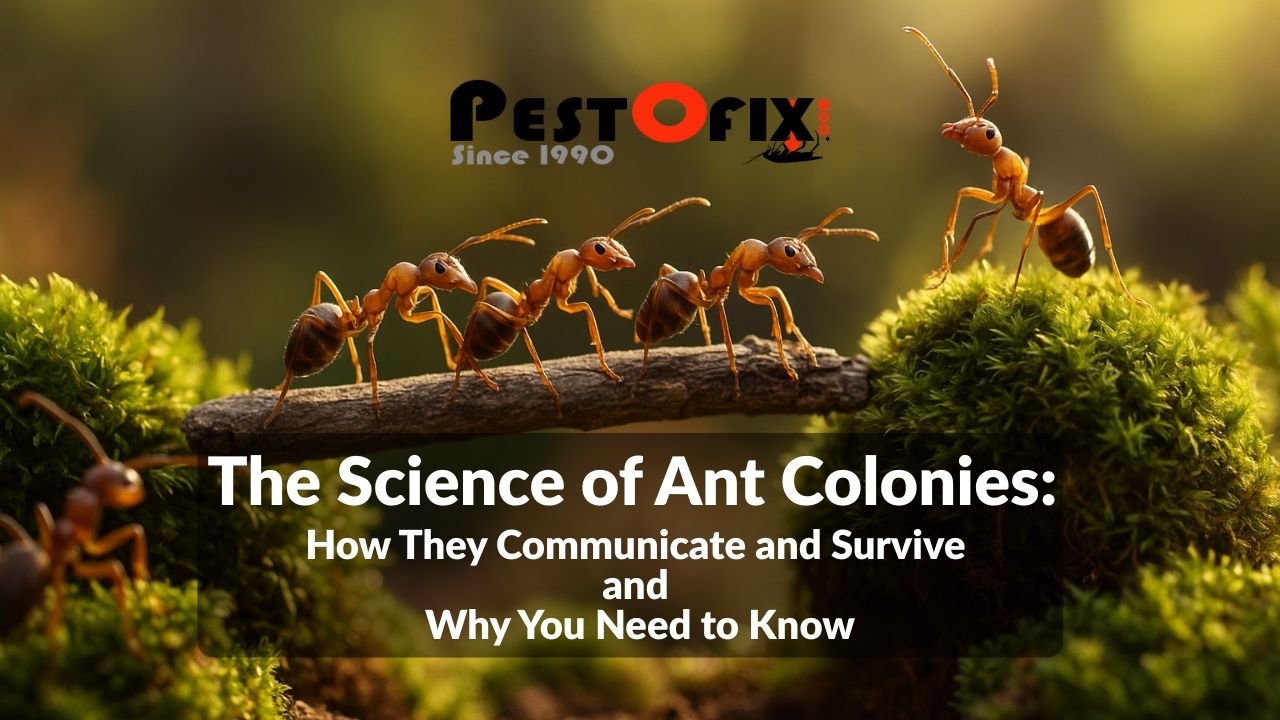
Ants are nature’s ultimate team players. From complex communication networks to astonishing survival strategies, these tiny creatures operate in colonies that function like perfectly tuned machines. Every ant knows its job, every action has a purpose, and together they build, defend, and sustain vast underground cities — all without a leader giving orders.
But what makes ants truly fascinating is not just their organization — it’s how much humans can learn from them. Their methods of communication, collaboration, and survival reveal deep biological intelligence that extends beyond their size. Understanding this behavior is also essential in pest control, where disrupting the colony’s coordination is the key to successful elimination.
Let’s explore the science behind ant colonies, their hidden communication language, survival mechanisms, and why you, as a homeowner or a pest control professional, should know how they operate.
The Structure of an Ant Colony
An ant colony is not just a group of insects; it is a living organism composed of different members working together toward a common goal — the survival and growth of their nest. Each member is specialized, forming a miniature version of a perfectly run society.
- Queen Ant: The mother and the heart of the colony. Her main function is reproduction — laying thousands of eggs that sustain the colony’s population.
- Worker Ants: Sterile females responsible for foraging, cleaning, building tunnels, feeding larvae, and caring for the queen.
- Soldier Ants: Larger and stronger ants that defend the nest from invaders and assist workers during food transport.
- Drones (Males): Their sole purpose is to mate with queens. After mating, they die, leaving the future of the colony secured.
How Ants Communicate
Ant communication is a marvel of biology. Unlike humans who rely on sight or sound, ants communicate primarily through chemical signals called pheromones. This allows them to coordinate complex tasks like foraging, defense, and nest construction seamlessly.
1. Chemical Signals (Pheromones)
Ants release pheromones from glands located on their bodies. These chemicals carry different meanings depending on the situation. The antennae of other ants detect these pheromones and respond instantly.
- Trail Pheromones: Guide others to food sources. The more ants walk the path, the stronger the scent becomes, reinforcing the route.
- Alarm Pheromones: Emitted when danger is near, triggering aggressive behavior and defensive formation.
- Recruitment Pheromones: Signal the need for help in carrying food or attacking intruders.
- Recognition Pheromones: Distinguish members of their own colony from outsiders.
2. Touch and Tactile Signals
Ants frequently touch each other’s antennae or bodies to share information — a behavior known as “trophallaxis.” Through these interactions, they exchange not only food but also chemical cues that convey colony status and hierarchy.
3. Vibrations and Movement
Some species communicate using body vibrations, especially within underground tunnels where sound travels poorly. These vibrations warn of threats or alert workers to structural changes in the nest.
Division of Labor: How Ants Organize Themselves
Ant colonies exhibit a sophisticated system of division of labor. No single ant controls the colony, yet it operates in perfect synchronization. This is due to a process called self-organization — where simple individual actions lead to complex group behavior.
- Young Workers: Stay inside the nest caring for eggs and larvae.
- Middle-Aged Workers: Build and repair tunnels, manage stored food, and maintain ventilation.
- Older Workers: Perform high-risk tasks like foraging or fighting predators.
Because ants are flexible in their roles, they can quickly adapt when the colony faces changes or losses. This adaptability is what makes ant infestations so persistent — killing a few ants doesn’t destroy their system; the colony reorganizes almost instantly.
Ant Intelligence: Collective Behavior and Problem Solving
Despite lacking centralized control, ant colonies display behavior that mimics intelligent planning. This “swarm intelligence” is one reason researchers study ants to develop algorithms in robotics, logistics, and AI.
- Shortest Path Finding: When searching for food, ants explore multiple paths, but the quickest route becomes reinforced by stronger pheromone trails — effectively mapping the most efficient route.
- Cooperation: Ants can carry items many times their weight by forming coordinated chains of workers.
- Adaptation: When faced with barriers or danger, ants instantly reroute and reorganize without confusion or conflict.
Nest Architecture: Nature’s Underground Engineering
Ant nests are architectural masterpieces. Depending on the species, they may be built in soil, wood, or tree canopies. Each nest includes specialized chambers for eggs, larvae, food storage, and ventilation.
- Carpenter Ants: Hollow out wood and can damage furniture or walls in homes.
- Weaver Ants: Create leaf nests by weaving them together with silk produced by their larvae.
- Fire Ants: Build large mound nests that protect against flooding and heat.
What’s remarkable is that ants don’t plan these structures. Each ant simply follows basic instincts, yet collectively they produce nests that regulate temperature, humidity, and air flow — a design that inspires modern sustainable architecture.
Survival Strategies of Ant Colonies
Ants have evolved for over 100 million years, developing survival strategies that allow them to thrive in almost every ecosystem on Earth.
- Multiple Queens: Some species have backup queens to ensure the colony’s continuity.
- Resource Storage: Ants collect and store food, seeds, and even liquids for times of scarcity.
- Rapid Relocation: When a nest is disturbed, worker ants immediately move eggs and larvae to a safer site.
- Seasonal Dormancy: In colder climates, ants reduce activity to conserve energy, while tropical ants remain active year-round.
Why You Need to Know: Lessons from Ants for Pest Control and Beyond
Understanding how ants function isn’t just fascinating — it’s practical. When ants invade homes, they act collectively, which means traditional pest control methods that target individual ants are often ineffective. Knowing their communication and hierarchy helps in designing better control strategies.
- Breaking Communication: Gel baits and barrier treatments disrupt pheromone trails, stopping colony coordination.
- Destroying the Source: Targeting the nest rather than surface ants ensures long-term elimination.
- Maintaining Cleanliness: Food residues fuel ant colonies; hygiene is your first defense.
Beyond pest control, humans can also learn valuable lessons from ants:
- Teamwork: Every ant contributes to the collective good; no role is too small.
- Efficiency: Ants waste nothing — a model for sustainability.
- Resilience: Colonies rebuild and adapt quickly after disruption — a reminder of nature’s persistence.
Ants as Pests: When Curiosity Turns into Infestation
While fascinating, ants can quickly become a household problem. Colonies multiply fast, and their search for food leads them into kitchens, pantries, and even electrical sockets.
- Common Invaders: Black ants, pharaoh ants, and carpenter ants.
- Health Risks: Contamination of food with bacteria as they travel through dirty areas.
- Damage: Carpenter ants can compromise wooden structures over time.
Practical Ant Prevention Tips
- Seal cracks, gaps, and holes near walls and floors.
- Store sugar, grains, and sweets in airtight containers.
- Clean kitchen counters regularly with vinegar-based solutions.
- Trim plants touching walls to prevent outdoor entry points.
- Consult professional pest control for recurring infestations.
Conclusion
The science of ant colonies reveals an incredible world of order, communication, and survival. Their societies, though tiny, operate with a level of cooperation that rivals human systems. Whether you’re intrigued by nature’s engineering or struggling with an ant infestation, understanding their behavior gives you the upper hand.
So the next time you see a trail of ants on your kitchen counter, remember — you’re witnessing one of nature’s most efficient networks at work. Knowing how they think and act isn’t just curiosity; it’s the first step toward controlling them effectively and appreciating their role in the ecosystem.
No comments yet — be the first!