
Urban Pest Ecology in India: How Cities Create Permanent Infestation Cycles
Introduction to Urban Pest Ecology in India
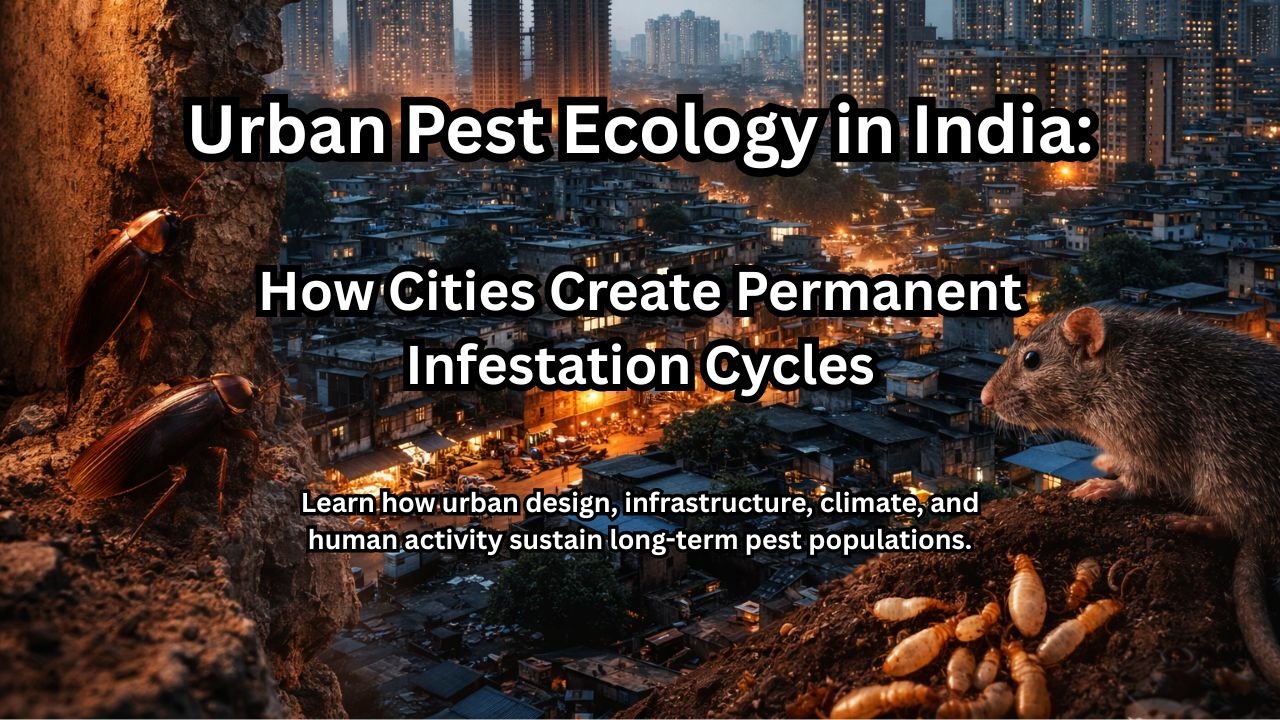
Urban pest infestations in India are often treated as isolated problems linked to individual homes, temporary hygiene lapses, or seasonal changes. In reality, most urban pest activity is the result of long-term ecological conditions created by cities themselves. Urban pest ecology examines how pests adapt to man-made environments and how these environments sustain infestations over extended periods.
Indian cities provide continuous shelter, stable food sources, artificial warmth, and interconnected movement pathways. These conditions remove many of the natural constraints that once limited pest populations, allowing infestations to become permanent rather than episodic. Consider the common household cockroach. In a natural setting, its population would be checked by predators, seasonal cold, and scarcity of food. Within the confines of a Mumbai high-rise or a Delhi residential colony, it finds a perennial summer in wall cavities, a daily feast in scattered organic waste, and a network of plumbing pipes that function as its protected interstate highways. The pest is no longer an invader; it is a resident, as adapted to the urban ecosystem as the human inhabitants. This shift from incidental to institutional presence forms the core of understanding why reactive, piecemeal pest control so consistently fails. The problem is not merely biological but fundamentally architectural and systemic.
Defining Urban Pest Ecology
Urban pest ecology refers to the relationship between pest species and urban environments. Unlike natural ecosystems, cities replace soil, vegetation, and seasonal scarcity with buildings, utilities, waste systems, and climate-controlled interiors. This discipline moves beyond viewing pests as simple invaders to understanding them as components of a new, human-made food web. It analyses the energy flows—from the food waste in a garbage chute to the rat that consumes it and the mites that live on that rat—all contained within the concrete and steel landscape. The ecology is defined by artificial selection pressures: traits like agility in navigating vertical surfaces, resistance to common pesticides, nocturnal behaviour to avoid human activity, and the ability to digest synthetic materials become evolutionary advantages. An urban ecosystem is fragmented yet interconnected, creating pockets of ideal habitat linked by corridors of transit, allowing for meta-populations that are resilient to localised eradication attempts.
In this environment, pests no longer rely on natural habitats. Instead, they adapt to structural voids, service ducts, drainage systems, and human activity patterns, forming stable populations that are difficult to disrupt. The "ecology" part is crucial—it implies interdependence. The gecko on the wall controls the moth population; the organic matter in a clogged drain feeds the mosquito larvae, whose adults might then feed the gecko. Human interventions, like spraying insecticides, can sever one link while inadvertently strengthening another, such as by eliminating a predatory spider species. This creates a simplified but stubbornly persistent ecosystem where a few hardy pest species, freed from natural competition, thrive. Understanding this web is the first step towards intelligent management rather than futile annihilation.
The Evolution of Pests from Natural to Urban Environments
Many pest species historically lived in forests, fields, or soil-based ecosystems. Urban expansion forced these species to either adapt or disappear. Those that survived developed traits allowing them to exploit human environments. This was not a passive process but a rapid evolutionary arms race. Take the common house sparrow or the urban rock pigeon. Their ancestors were cliff-dwellers and open-field foragers. The verticality of buildings presented a perfect analogue to cliffs, while the constant human provision of food scraps and sheltered nesting sites in signage and balconies created a richer, more reliable habitat than nature ever could. Their lifecycles accelerated, and their behaviours became bolder. Similarly, rodents like the Norway rat evolved from burrowers in riverbanks to expert excavators in urban waste dumps and sewage systems, their social structures becoming more complex to navigate the challenges and opportunities of city life.
This evolutionary shift explains why certain pests thrive in cities while others do not. Urban pests are not accidental invaders; they are species that have successfully adapted to human-made ecosystems. They possess what ecologists call "r-selected" traits: high reproductive rates, rapid maturation, and generalist feeding habits. The mosquito Aedes aegypti, vector of dengue and chikungunya, exemplifies this. Its ancestral form bred in tree holes in forests. The urban variant perfected the use of artificial containers—discarded tyres, water tanks, flower vases, and even bottle caps. This behavioural plasticity is a direct adaptation to the urban hydrological cycle, which provides countless small, isolated water bodies instead of a few large natural ones. The city, therefore, acts as a powerful evolutionary filter, selecting for resilience, opportunism, and a tolerance for disturbance—traits that make the resulting pests exceptionally difficult to dislodge.
Indian Urban Development and Ecological Disruption
Rapid urbanisation in India has significantly altered local ecosystems. Large-scale construction replaces open land with dense housing, commercial complexes, and transport infrastructure, displacing existing wildlife and insects. This process is not a clean slate but a violent overlay. The topsoil, which supported a diverse community of insects, arthropods, and microorganisms, is scraped away or buried under concrete. The natural drainage patterns are severed, creating zones of waterlogging—ideal for mosquito breeding. The loss of native predators like birds, reptiles, and beneficial insects creates an ecological vacuum. This vacuum is not left empty; it is rapidly filled by species that can capitalise on the chaos. The disturbance itself is the catalyst for infestation, as it destroys the existing checks and balances of the local ecology.
Rather than eliminating pests, this disruption forces them into newly built structures, where survival conditions are often superior to their original habitats. A field rat, its burrows destroyed by excavation, finds superior shelter in the undisturbed, granular insulation of a building's foundation. Termites, their underground foraging networks severed, turn their attention to the structural timber and cellulose-based materials of the new buildings rising around them. The construction phase is particularly vulnerable, as it provides abundant food (packaging, worker leftovers), water (stagnant in pits and tanks), and temporary harbourage in materials and debris. The pests are not coming from outside; they are often the original inhabitants, adapting in real-time to the new, more resource-rich environment humans have unwittingly created for them.
Continuous Construction and Redevelopment
Indian cities rarely remain static. Demolition, renovation, road expansion, and infrastructure upgrades are ongoing processes. Each disturbance displaces pest populations, pushing them into adjacent buildings. This creates a perpetual wave effect. A society undergoing redevelopment doesn't just have a temporary mess; it becomes an epicentre for dispersing pests. Rodents, insects, and arachnids flee the vibration and destruction, seeking sanctuary in the nearest intact structures. This turns every construction site into a pest redistribution node, ensuring that even well-maintained buildings are constantly under pressure from neighbouring disturbances. The city-wide pest population is thus never localized; it is fluid and dynamic, moving through the urban matrix in response to human activity.
- Excavation exposes underground pest habitats: Digging for basements or pipelines unearths entire colonies of ants, termites, and rodent nests. These disturbed populations don't perish; they scatter and infiltrate nearby buildings through cracks and utility entry points, often establishing new satellite colonies that are more hidden and protected than their original ones.
- Construction debris provides temporary shelter: Piles of bricks, stacks of timber, discarded insulation, and abandoned machinery create perfect transitional habitats. They offer darkness, moisture, and protection. These debris sites become breeding and staging grounds, allowing pest populations to consolidate and grow before moving into the permanent structures.
- Adjacent occupied buildings become migration targets: Pest migration is not random. It follows scent trails, warmth gradients, and airflow from ventilation systems. An occupied building offers the ultimate prize: reliable food and water. The pressure from a nearby construction site can force pests to overcome barriers they would normally avoid, leading to infestations in previously unaffected units.
Structural Features That Support Pest Survival
Modern buildings unintentionally provide ideal pest habitats. Design elements meant for convenience and aesthetics often create protected spaces that are difficult to access and monitor. Our architectural choices, driven by cost, climate control, and utility, are meticulously exploited by pests. The pursuit of seamless interiors creates vast, interconnected void spaces; the need for services creates hidden highways. A building, from a pest's perspective, is not a solid object but a porous, three-dimensional landscape of caverns, tunnels, and resource nodes. This mismatch between human perception and pest reality is a primary reason infestations persist. We live on the finished surfaces, while they thrive in the infrastructure we never see.
Wall Cavities and False Ceilings
Wall voids, false ceilings, and concealed service areas offer darkness, warmth, and protection from disturbance. These spaces allow pests to nest, reproduce, and move without detection. They form the core "heartland" of an urban pest population. A wall cavity is a climate-controlled high-rise for insects. The temperature is stable, shielded from the external weather. The relative humidity is often perfect, thanks to minor plumbing leaks or condensation. There are no natural predators. For rodents, these spaces offer safe nesting sites where they can raise young completely undisturbed. The false ceiling, especially above kitchens and bathrooms, becomes a superhighway connecting different rooms, often contaminated with food debris and moisture droplets, making it a foraging route as well.
- Limited human access: These are essentially sealed ecosystems. Once drywall is up or ceiling tiles are placed, they are rarely inspected. This allows infestations to grow to substantial levels before any visible signs—like sounds, odours, or actual insects—breach the human-occupied space.
- Stable internal temperatures: The thermal mass of buildings buffers against outside temperature swings. This eliminates the seasonal die-off that helps control pest populations in natural settings. Breeding continues year-round, leading to exponential growth.
- Low exposure to control measures: Surface sprays and baits placed in rooms have minimal impact on populations nesting deep within walls. Pests can bypass treated areas using these voids, and insecticides rarely permeate these spaces effectively. This leads to the illusion of control while the core population remains intact.
Service Shafts and Utility Ducts
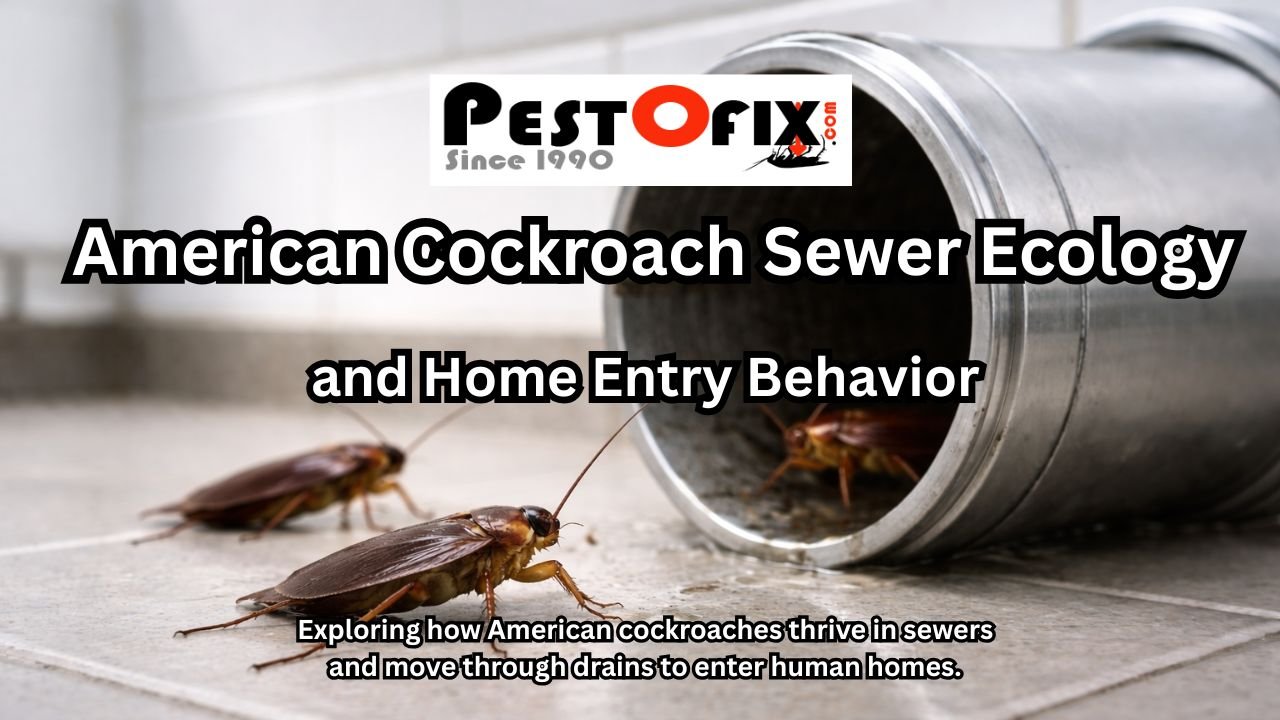
Electrical conduits, plumbing lines, ventilation shafts, and drainage pipes act as continuous movement corridors across floors and buildings. If wall cavities are the heartland, service shafts are the interstate system. They are designed to run vertically and horizontally, connecting every unit in a building and often linking separate structures. A rat can enter a drainage system at the ground level of one building and emerge from a toilet in a high-rise apartment several blocks away. Cockroaches use electrical conduits to travel between apartments, explaining why treating one unit in isolation is futile. These pathways are also protected, rarely cleaned, and often warm from electrical currents or carrying moisture, making them ideal environments for travel and even temporary harbourage.
- Enable vertical and horizontal movement: This connectivity shatters the concept of unit-based infestation. Pests operate on the scale of the entire building or complex. An infestation on the 10th floor can have its source in a basement garbage room, with the pests using plumbing stacks to travel between them.
- Connect multiple units and structures: Ducts for dryer vents, AC drainage, and telecom cables often have small gaps at connection points. These are gateways for pests to move between adjacent homes or from commercial spaces to residential ones, creating community-wide infestation networks.
- Remain undisturbed for decades: These systems are sealed during construction and never opened unless there is a major failure. This provides generations of pests with a permanent, unchanging transit network. Their scent trails become established in these ducts, guiding new individuals and ensuring efficient exploration of the urban habitat.
Urban Density and Shared Infestation Networks
High-density housing is a defining feature of Indian cities. Apartments, gated societies, and mixed-use complexes create shared ecosystems where pest activity extends beyond individual ownership. Density is the amplifier of urban pest ecology. It reduces the average distance between food, water, and shelter to near zero. In a dense colony or high-rise, a pest population is not a collection of isolated families but a single, distributed mega-colony. The boundaries that matter to humans—property lines, walls, floors—are mere minor obstacles or even facilitators for pests. This shared fate means that the hygiene and maintenance practices of one resident directly impact dozens of others. The entire building shares a common "immune system," and its weakest point defines the health of the whole.
An infestation in one unit often indicates a wider population distributed across shared infrastructure. The visible sighting is merely the "spillover" from a reservoir population living in the common areas: the elevator shaft, the garbage chute room, the underground parking, the common false ceiling of the hallway. Treating only the unit where the pest was seen is like applying a bandage to one symptom of a systemic infection. The pressure from the shared reservoir will quickly refill the treated space. This is why society-level management protocols are essential. Density creates collective responsibility, whether acknowledged or not, for pest ecology. A single neglected balcony garden with stagnant water can supply mosquitoes to an entire vertical stack of apartments via the building's airflow.
Waste Generation and Food Availability
Cities generate continuous food waste through households, markets, restaurants, and informal vendors. Even well-managed areas cannot completely eliminate food access. The urban metabolism consumes vast amounts of organic material and excretes it as waste. This waste stream is the primary energy input for the city's pest food web. It is staggeringly reliable. Unlike the seasonal fruiting of trees or the sporadic availability of carrion in nature, urban food waste is a daily, guaranteed event. The timing and location are predictable: garbage bags placed outside doors in the evening, market cleanings after close, sewer overflows during rains. Pests have evolved their activity cycles to match these human schedules. The sheer volume also means there is enough for all—from microscopic bacteria and fungi that break it down, to the insects that feed on them, to the rodents and birds that feed on the insects and the waste directly.
Decentralised Food Sources
Urban pests do not depend on a single food source. Multiple small access points ensure uninterrupted feeding. This decentralisation is key to their resilience. If one food source is secured—a kitchen is meticulously cleaned—dozens of alternatives exist within a small radius. This makes starvation an impossible strategy for control. The pest ecology is underwritten by a diffuse, redundant network of nourishment that is impossible to fully eradicate without transforming fundamental urban logistics.
- Household kitchens: Even in clean homes, minute crumbs, unwashed utensils overnight, pet food bowls, and grease films inside cupboards provide ample nutrition for insects like ants and cockroaches.
- Garbage collection zones: Centralised collection points, even with bins, are often sites of spillage and temporary storage. They are 24/7 cafeterias for rodents, flies, and stray animals, which themselves host fleas and ticks. The odour plume from these sites acts as a long-distance attractant.
- Commercial food outlets: The back alleys of restaurants, bakeries, and grain shops are constant sources of high-quality food. Grease traps, dumpsters, and spillage sustain large populations that then disperse into surrounding residential areas. The pest populations supported by these commercial hubs act as source populations for the wider neighbourhood.
Climate, Heat Islands, and Moisture Retention
Urban environments alter local climate conditions. Concrete, asphalt, and dense construction create heat islands that reduce temperature variation. The urban heat island effect is a well-documented phenomenon where cities are significantly warmer than surrounding rural areas. This has a direct biological impact. It extends the breeding season for many pests. Mosquitoes that might be limited to monsoon months in villages can breed in lesser numbers throughout a mild urban winter. It accelerates the reproductive cycles of insects; warmer temperatures mean faster gestation and maturation, leading to more generations per year. The heat also reduces the need for pests to seek hibernation, keeping them active and feeding continuously. The city's thermal mass essentially provides free, year-round central heating for its pest inhabitants.
Combined with monsoon moisture and plumbing leaks, cities offer ideal conditions for pest survival throughout the year. Moisture is often the limiting factor for pests like termites and cockroaches. Urban areas provide it in abundance. Poorly drained flat roofs, clogged balcony drains, leaking internal plumbing, and condensation on cold water pipes create a network of micro-humid habitats. During the monsoon, this effect is amplified, with water pooling in basements, dug-up roads, and construction sites. This "urban hydrology" creates perfect breeding sites for mosquitoes and ideal conditions for mould, which in turn feeds many insects. The combination of perpetual warmth and episodic, reliable moisture creates a tropical microclimate within the city that is often more hospitable to pests than the natural environments they left behind.
The Hidden Phase of Urban Pest Infestations
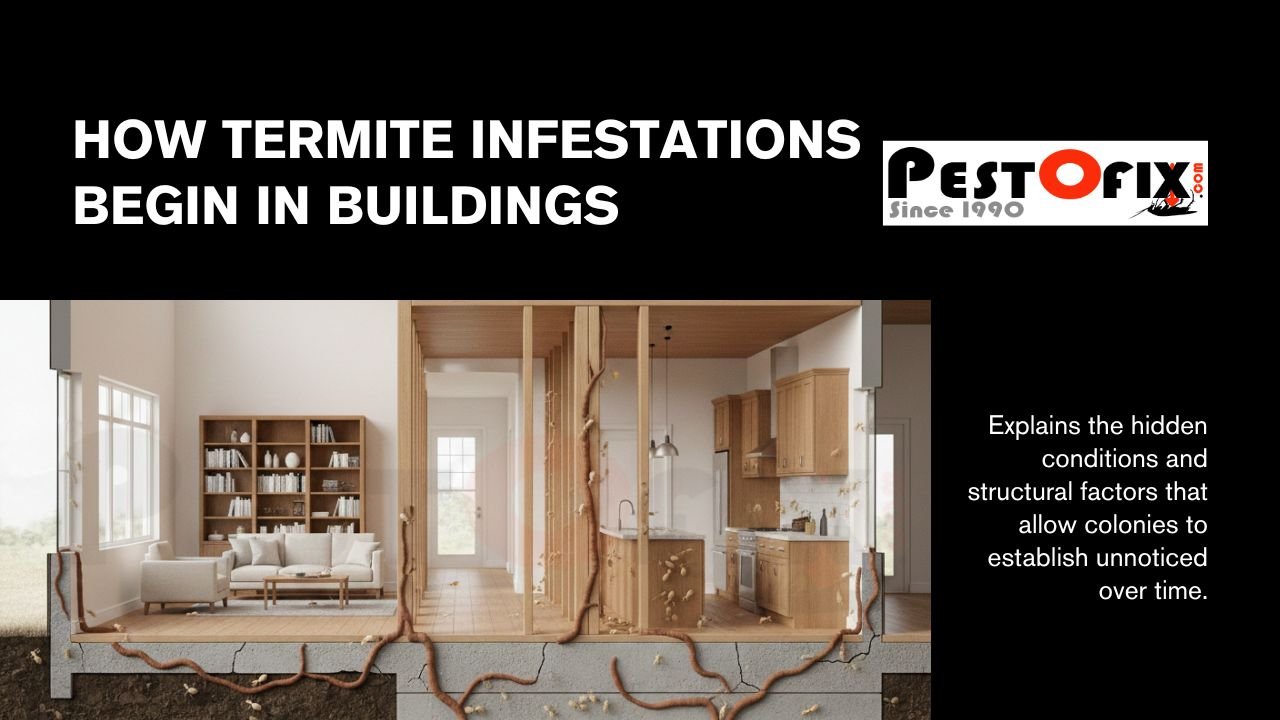
Most urban pest infestations operate in a concealed phase for extended periods. During this phase, pests remain active inside structures without visible signs. This latency period is critical to understanding infestation severity. When a pest species first colonises a building—often during construction or from a neighbouring disturbance—it establishes a small, cryptic population in a void space. This population grows slowly at first, below the threshold of human detection. They may forage at night, leaving minimal evidence. During this time, which can last months or even years, they are establishing trails, locating secondary harbourages, and breeding. The infestation is maturing and entrenching itself long before the homeowner sees the first cockroach on the kitchen counter.
This hidden activity leads to delayed detection and the false assumption that infestations are sudden or unexpected. The "sudden" appearance of swarming termites or a line of ants is not the beginning of the problem; it is the culmination of the hidden phase. It represents the point where the population has outgrown its primary harbourage and is either swarming to reproduce and establish new colonies or needs to expand its foraging territory. This is why panic reactions are common—the problem seems to have appeared overnight. In reality, the ecological conditions for the infestation were created long ago, and the pests have been present, evolving and adapting within the structure, waiting for their numbers to reach a critical mass. By the time they are seen, the infestation is often extensive and well-established, making control more difficult and costly.
Why One-Time Treatments Fail in Urban Ecosystems
Single interventions rarely disrupt the ecological conditions supporting urban pest populations. While visible activity may decrease temporarily, underlying populations remain intact. A one-time treatment is a shock to the system, not a systemic change. It addresses the symptomatic, visible pests—the foragers and explorers—while leaving the core breeding populations in wall voids, ceiling spaces, and neighbouring units untouched. These core populations have high reproductive rates and can quickly replenish the lost numbers. Furthermore, such treatments often ignore the attractants—the food, water, and entry points—that drew the pests in the first place. Without altering the fundamental ecology of the space, it is simply a temporary reduction of a symptom. The environment remains hospitable, and re-infestation is not a possibility; it is an inevitability.
Population Distribution Beyond Treated Areas
Urban pest populations are rarely confined to one treated location. Their survival strategy is based on distribution and connectivity. Eliminating one node in their network does not collapse the system.
- Multiple nesting sites: Mature infestations almost always have satellite harbourages. A cockroach population may have its primary nest behind the refrigerator motor (for warmth) but secondary sites inside a bookshelf, beneath a sink cabinet, and in an electrical switch box. A one-time spray might affect only one of these sites.
- Shared movement pathways: As discussed, service ducts and wall voids allow for constant movement and recolonisation. Treating an apartment does nothing to the pests travelling in the plumbing stack next to it. They will simply re-enter once the chemical residue loses potency.
- Re-entry from adjacent structures: In dense urban settings, your neighbours' pest problems are your pest problems. Treatment in one home can create a "pest sink," where pests from adjacent untreated areas are drawn into the newly vacated territory. Effective control requires a coordinated, perimeter-based approach that creates a protective zone, not just cleaning an interior space.
Human Behaviour and Urban Pest Ecology
Human routines, storage habits, waste handling, and maintenance practices directly influence pest survival. Urban lifestyles often unintentionally support infestations. Our behaviour is the software that runs on the hardware of urban infrastructure. We design the ecosystem through our buildings, but we populate it with resources through our daily actions. The habit of storing old newspapers and cardboard (ideal harbourage for cockroaches and silverfish), leaving pet food out overnight, over-watering indoor plants (creating soil moisture for gnats), or delaying the repair of a slow faucet drip all contribute directly to the pest habitat. Our preference for shopping in bulk can lead to long-term storage of grains, which if not in airtight containers, becomes a larder for pantry moths and beetles. Our weekly garbage disposal routine creates a predictable pulse of food availability. Even our choice of dense, complex furniture designs creates hidden, undisturbed spaces perfect for nesting.
Changing this behaviour is as crucial as any chemical treatment. It involves shifting from a reactive "see-and-kill" mindset to a proactive "deny-and-deter" ecology. This means understanding that pests are not moral failures but opportunistic organisms responding to the environment we create. Sealing food, managing waste effectively, reducing clutter, fixing leaks promptly, and conducting regular inspections of hidden spaces are behavioural interventions that alter the ecological favourability of a home. On a societal level, collective behaviours like timely garbage collection, proper maintenance of common areas, and community-wide pest management agreements are necessary to manage the shared infestation network. Human behaviour is the most dynamic variable in the urban pest equation, and therefore, the one with the greatest potential for positive impact.
Urban Pest Ecology as a Permanent Cycle
When shelter, food, warmth, and connectivity remain constant, pest populations stabilise rather than collapse. This creates permanent infestation cycles that persist across years. The goal shifts from "eradication"—a near-impossible feat in an open urban system—to "management" and "suppression." The cycle has clear phases: Colonisation (often hidden), Establishment (population growth and trail formation), Expansion (visible activity and satellite colony formation), and apparent Retreat (post-treatment), which is usually just a return to a hidden, low-level population that will begin the cycle anew. Each failed or partial intervention can inadvertently strengthen the cycle by selecting for pesticide-resistant individuals or pushing the population deeper into the infrastructure, making future control harder.
Breaking these cycles requires long-term ecological disruption rather than short-term suppression. It requires an integrated approach that attacks all legs of the pest's survival stool simultaneously: **1. Exclusion** (sealing entry points, repairing screens), **2. Resource Denial** (sanitation, moisture control, proper storage), **3. Habitat Modification** (reducing clutter, sealing voids where possible), and **4. Population Control** (using targeted, intelligent methods like insect growth regulators, judicious baits, and biological controls where appropriate). This must be done consistently and often at a community scale. Monitoring becomes key—using sticky traps, regular inspections—to detect the hidden phase early. The cycle is permanent because the city is permanent; therefore, management must be a permanent, integrated component of urban living, akin to plumbing maintenance or electrical safety checks.
Conclusion: Understanding Cities as Pest Ecosystems
Indian cities function as complex ecosystems that support pest survival at every level. Recognising urban pest ecology shifts the focus from elimination to management, monitoring, and structural awareness. We must move beyond the pesticide spray can as the sole symbol of pest control and embrace the caulk gun (for sealing), the airtight container (for denying food), the maintenance log (for tracking moisture issues), and the community meeting (for coordinated action). The city is not a fortress besieged by pests; it is a habitat we co-inhabit, albeit unwillingly, with other species that have proven more adaptable than we anticipated. Their success is a direct reflection of the ecological niches our urban design and behaviour create.
Understanding how cities create and sustain infestations is essential for realistic expectations, informed decision-making, and long-term urban pest management. It leads to smarter construction codes that mandate pest-proofing during building, to public health policies that address waste management and stagnant water at a systemic level, and to individual practices that are sustainably hygienic. When we see the city as an ecosystem, we stop fighting a never-ending war and start practising intelligent habitat management. The pests may never be fully gone, but their populations can be reduced, monitored, and kept at a level where they no longer pose a significant threat to our health, property, and peace of mind. This ecological perspective is not a surrender; it is the beginning of a smarter, more sustainable strategy for coexisting with the inevitable biology of our vast, vibrant, and complex urban landscapes.
No comments yet — be the first!