
Why Pest Infestations Spread Silently in Apartments: A Pest Control Perspective
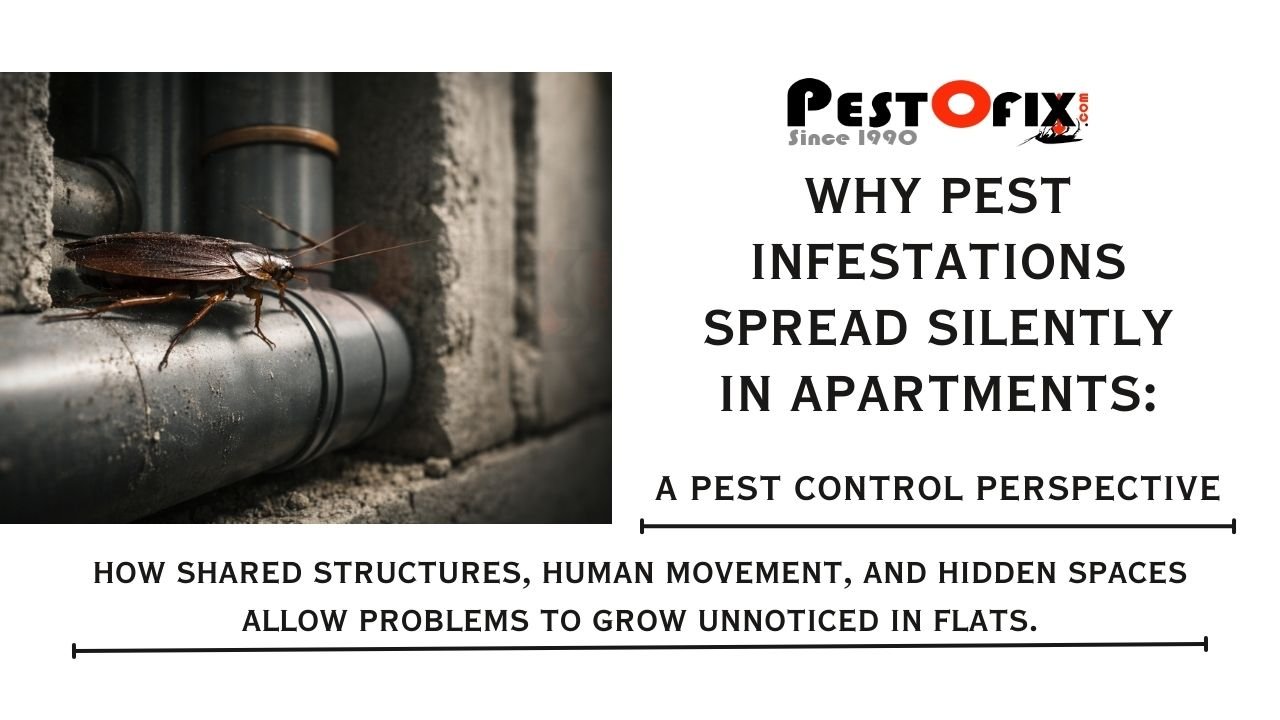
Why Pest Infestations Spread Silently in Apartments
Apartment living has become the dominant housing pattern in urban India. While apartments offer convenience and shared infrastructure, they also create an ideal environment for pest infestations to spread silently. Unlike independent houses, apartment buildings function as interconnected systems where pests can move freely without being detected.
From a pest control perspective, apartment infestations are rarely confined to a single home. In most cases, pests have already established themselves in multiple units long before residents notice visible signs. This silent spread is not accidental — it is the result of architectural design, pest survival behavior, and human activity working together.
The Structural Nature of Apartments Encourages Hidden Pest Movement
Apartments are designed with shared walls, ceilings, floors, and service shafts. These structures contain cavities that house plumbing pipes, electrical wiring, drainage systems, and ventilation ducts. For pests, these cavities act as protected highways.
Most indoor pests avoid open spaces and human interaction. Instead, they prefer dark, warm, and undisturbed zones. Wall voids, ceiling gaps, and floor channels provide exactly these conditions.
From a pest control inspection standpoint, infestations in apartments rarely originate in visible areas. They begin and expand inside these concealed structural zones.
Shared Walls Create Continuous Infestation Pathways
In apartment buildings, walls do not act as barriers. They act as connectors. A pest colony inside one wall cavity can easily extend into adjacent flats without entering living rooms or bedrooms.
This is why residents often say, “My home is clean, but pests keep appearing.” Cleanliness alone does not prevent pests that are traveling internally through shared structures.
Common wall-related infestation pathways include:
- Electrical conduit channels
- Switchboard back cavities
- Wall-mounted cabinet gaps
- False ceiling edges
- Structural expansion joints
From a pest control perspective, these pathways allow infestations to spread horizontally across multiple apartments on the same floor.
Vertical Spread Through Ceilings and Floors
Apartment infestations do not spread only sideways — they spread vertically as well. Ceiling slabs and floor cavities contain numerous gaps for pipes and wiring to pass between floors.
Pests use these vertical shafts to move upward and downward, allowing infestations to affect entire stacks of apartments.
Vertical infestation movement is commonly observed through:
- Bathroom exhaust ducts
- Kitchen chimney outlets
- Drainage pipe sleeves
- AC piping channels
- Lift shaft proximity walls
This explains why residents on higher floors often experience infestations even when there is no direct outdoor access.
Plumbing and Drainage Systems Enable Silent Infestation Growth
Plumbing systems are among the most critical factors in silent apartment infestations. Kitchens, bathrooms, and utility areas are connected through complex drainage and water supply networks.
These systems provide moisture, warmth, and organic residue — all essential survival conditions for pests.
Drain lines and pipe joints often have small gaps where pipes enter walls or floors. These gaps remain hidden behind tiles and cabinets, creating perfect entry and movement points.
From a pest control assessment viewpoint, plumbing-related risks include:
- Under-sink pipe penetrations
- Floor drain connections
- Shared sewage stacks
- Bathroom wall cavities
- Utility shaft access panels
Because these systems connect multiple flats, an infestation originating in one unit can silently spread throughout an entire building line.
Ventilation and Airflow Play an Overlooked Role
Ventilation ducts are designed to circulate air, but they also circulate scent, heat, and humidity. Pests are highly sensitive to these environmental cues.
Airflow patterns can guide pests toward food sources, nesting zones, and human activity areas without direct exposure.
In apartments, exhaust vents and air ducts often connect multiple units, creating shared airflow channels.
Ventilation-related infestation factors include:
- Shared bathroom exhaust systems
- Kitchen ventilation shafts
- Central AC ducting
- Unsealed vent openings
- Service duct airflow leaks
From a pest control perspective, airflow-driven movement explains why pests sometimes appear suddenly in rooms far from kitchens or bathrooms.
Human Movement Accelerates Silent Pest Spread
Pests are not transported only through structures. Human behavior plays a major role in silent infestation spread within apartment communities.
Daily activities such as shifting furniture, carrying groceries, receiving deliveries, or returning from travel unknowingly assist pests or their eggs in moving between homes.
Common human-assisted infestation transfer points include:
- Second-hand furniture
- Moving cartons and boxes
- Luggage from hotels or transport hubs
- Shared storage areas
- Common utility rooms
In apartment buildings, elevators and corridors become transition zones where infestations expand quietly.
Why Early Signs Are Rarely Recognized
One of the biggest reasons apartment infestations spread silently is that early warning signs are subtle and often misinterpreted.
Most pests are nocturnal and remain hidden during human activity hours. Their presence is masked by everyday apartment sounds and smells.
Early indicators often dismissed include:
- Occasional sounds inside walls
- Minor debris near cabinets
- Unexplained odors
- Rare sightings that seem isolated
- Temporary pest activity that disappears
From a pest control standpoint, these signs usually indicate an infestation that has already progressed beyond the initial stage.
Life Cycles Allow Infestations to Multiply Unnoticed
Most pests have life cycles designed for survival in hidden environments. Eggs, nymphs, and juvenile stages develop out of sight, protected within walls, floors, and furniture.
This delayed visibility creates a false sense of safety for residents.
Key lifecycle-related reasons infestations remain hidden:
- Eggs hatch in concealed locations
- Juveniles require minimal movement
- Feeding occurs internally or at night
- Population growth happens before sightings
By the time adult pests appear, the infestation has often already spread across multiple units.
Why Apartment Infestations Feel Sudden and Overwhelming
Residents often describe apartment infestations as sudden outbreaks. In reality, these infestations have been developing silently over weeks or months.
The interconnected nature of apartments allows pests to establish multiple nesting zones before detection.
From a pest control perspective, visible infestation represents only a small fraction of total pest activity.
Professional Pest Control Perspective on Apartment Assessments
Apartment infestations require a broader assessment approach than single-home environments. Pest control professionals evaluate building-wide risk factors rather than isolated rooms.
Professional assessment focuses on:
- Shared structural pathways
- Vertical and horizontal movement zones
- Moisture and airflow patterns
- Human-assisted transfer risks
- Hidden nesting environments
This level of understanding is essential for identifying why infestations persist silently in apartment settings.
Recognizing these infestation dynamics is a critical part of professional pest control evaluation in apartments.
Key Takeaway: Knowledge Reduces Infestation Risk
Apartment pest infestations are rarely caused by a single mistake or factor. They result from a complex interaction between building design, pest biology, and human activity.
Understanding how infestations spread silently empowers residents to recognize risks early and seek professional assessment before the problem escalates.
In apartment environments, informed awareness forms the foundation of effective pest control planning.
No comments yet — be the first!