

 Get Estimate
Finding mosquitoes inside your home — especially during daytime — often feels confusing and frustrating. Many homeowners assume mosquitoes only enter randomly from outside, but indoor mosquito presence is rarely accidental.
In most homes, one overlooked habit creates a stable indoor environment that allows mosquitoes to survive, breed, and return repeatedly. Understanding this mistake is the first step toward long-term mosquito control.
The One Mistake: Allowing Hidden Standing Water Indoors
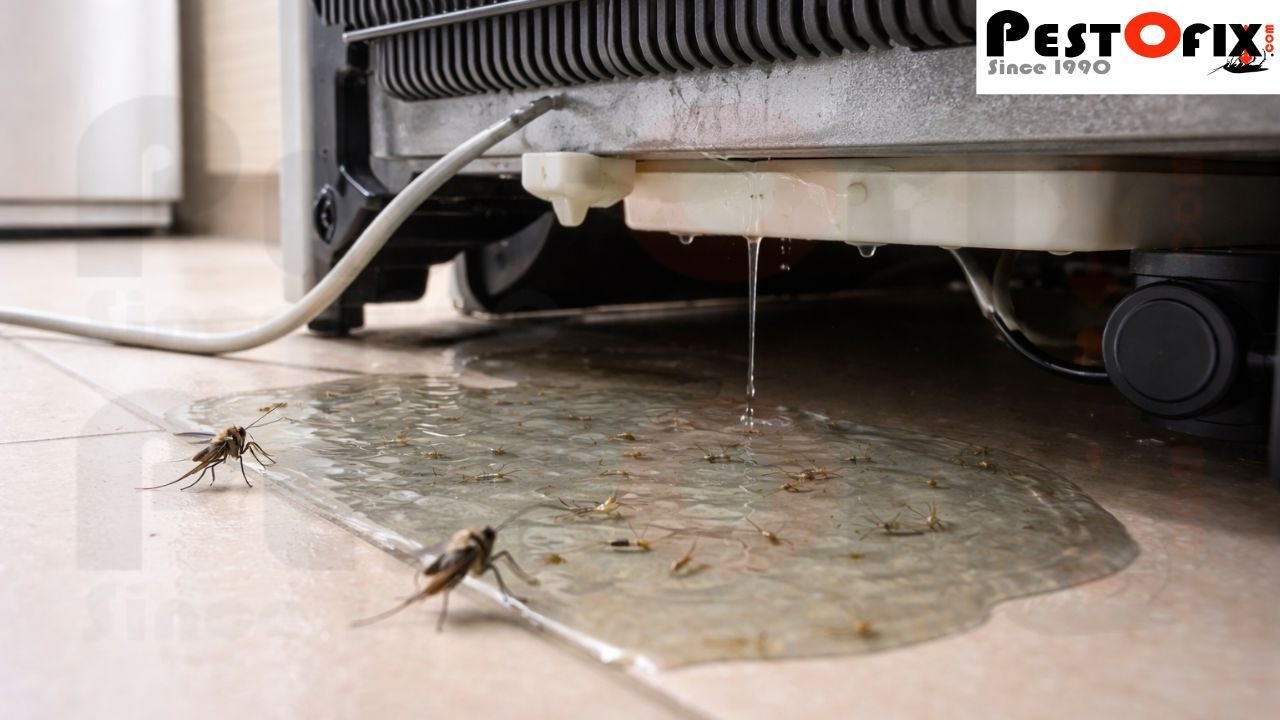
Most people associate mosquito breeding with outdoor drains or stagnant ponds. However, mosquitoes adapt quickly to indoor environments when water sources are available. The female Aedes mosquito — responsible for dengue and chikungunya — specifically prefers clean, still water in small, dark containers. Your home provides exactly that.
- Water collected in bathroom floor drains and corners
- Plant saucers, vases, and decorative containers holding water
- Water accumulation behind refrigerators, water dispensers, or air coolers
- Overhead water tank overflows pooling on terraces
- Water stored in buckets or mugs left unattended in bathrooms
- Unused toilets or bathroom fixtures with stagnant water
This single oversight allows mosquitoes to complete their entire life cycle without ever leaving your home — making the problem self-sustaining.
Why Mosquitoes Prefer Staying Inside Once They Enter
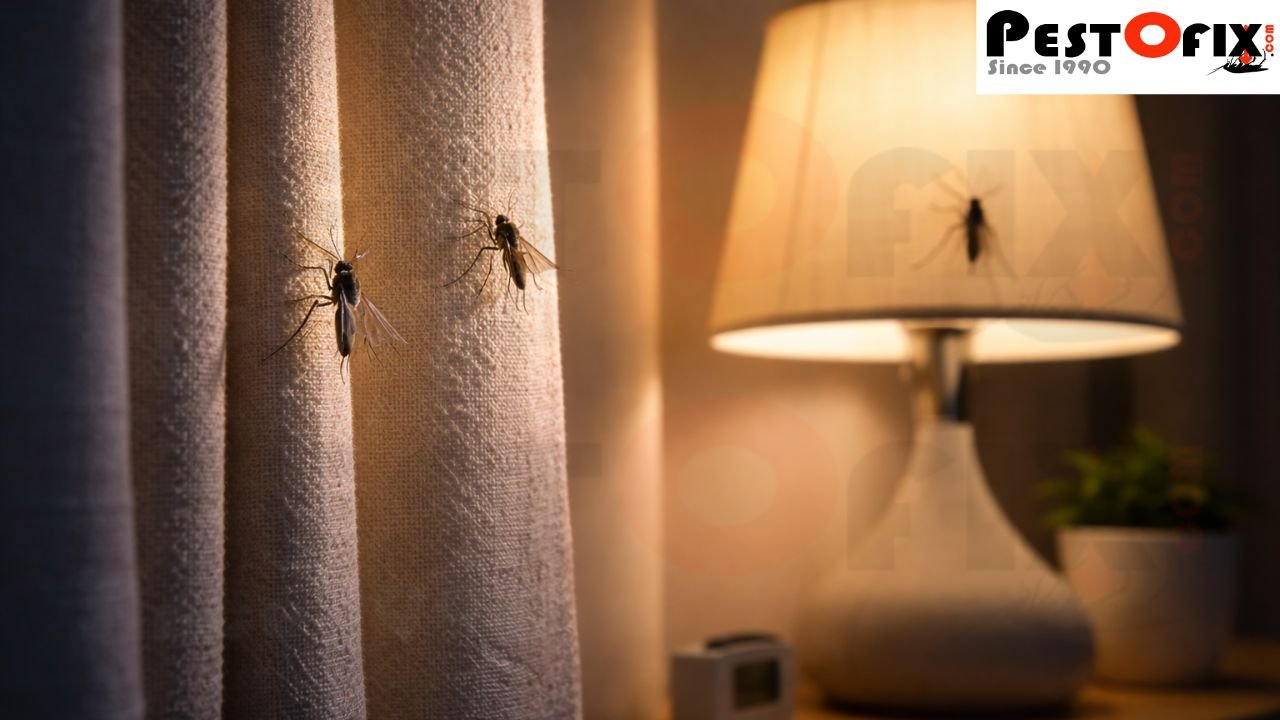
Once mosquitoes discover a safe indoor environment, they rarely leave voluntarily. Your home offers everything a mosquito needs to thrive:
- Stable temperatures that protect them from outdoor weather swings
- Dark resting zones behind furniture, curtains, and inside wardrobes
- Reliable access to human hosts for blood meals at night
- No natural predators like birds, dragonflies, or bats
- Consistent humidity from kitchens, bathrooms, and AC units
Why Killing Visible Mosquitoes Doesn't Solve the Problem
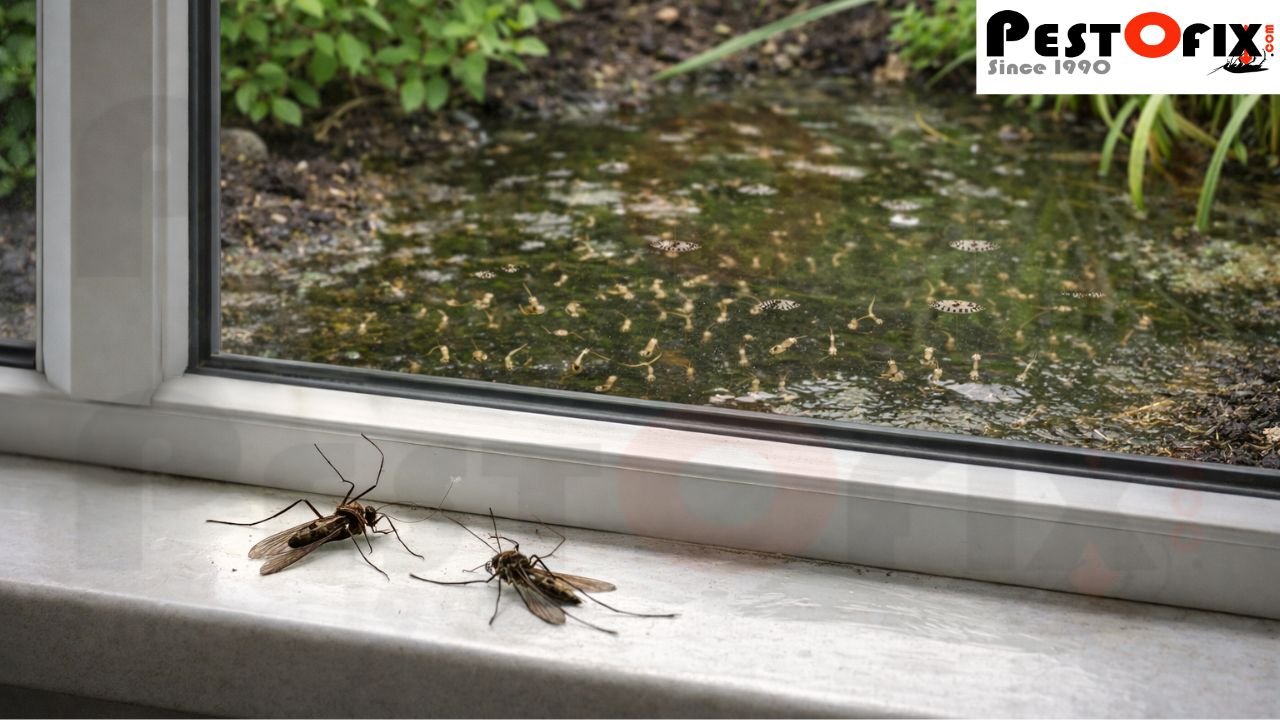
Swatting mosquitoes or using sprays only targets adult insects — which represent just one stage of a four-stage life cycle. The other three stages (egg, larva, pupa) remain in water and are completely unaffected by surface sprays, coils, or electric bats.
- Mosquito eggs hatch within 24–48 hours in warm water
- Larvae mature unnoticed in indoor moisture zones within 7–10 days
- New adult mosquitoes emerge continuously from hidden water
- Fogging kills adults but leaves 100% of eggs and larvae alive
This cycle creates the illusion of an endless mosquito problem — when in reality, the source has simply never been addressed.
Common Indoor Areas Most Homeowners Never Check
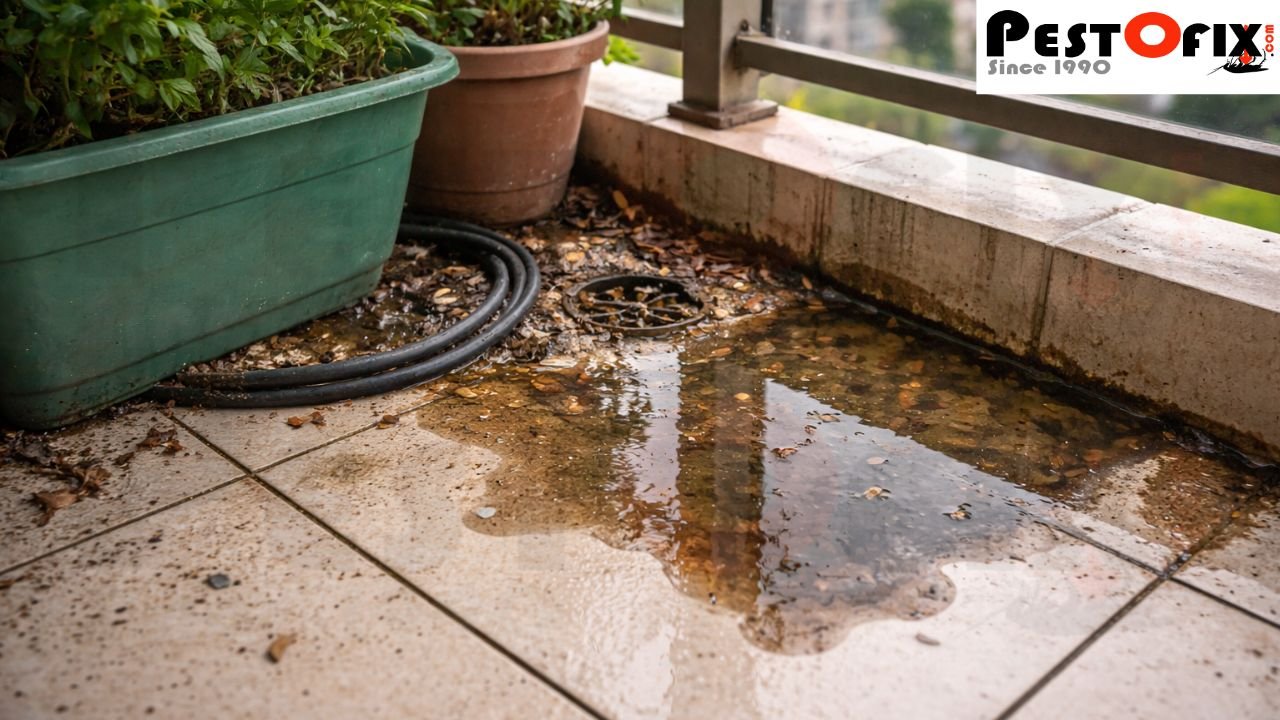
Mosquito breeding sites are rarely visible during a casual inspection. These are the most commonly overlooked indoor zones:
- Unused bathrooms — floor traps collect water and are rarely inspected
- Appliance trays — refrigerators, water dispensers, and AC drip trays accumulate water
- Balcony corners and utility ducts — water pools after rain or mopping
- Overwatered indoor plants — saturated soil and saucers are ideal breeding sites
- Overhead storage areas — containers left upward-facing collect water
- Service shafts and ducts — in apartments, shared vertical spaces retain moisture
Missing even one of these zones allows mosquitoes to maintain a breeding population inside your home, regardless of how many adults you kill.
Why Mosquito Problems Get Worse During Certain Seasons
Seasonal shifts amplify the indoor mosquito problem in Delhi NCR. During monsoon (July–September) and post-monsoon humidity (October–November), conditions inside homes become dramatically more favourable for mosquitoes:
- Monsoon moisture seeps into walls, creating damp indoor microclimates
- Closed windows during rain trap mosquitoes inside
- Increased indoor water usage and spillage
- Humidity above 70% extends mosquito lifespan significantly
- Cooler outdoor temperatures drive mosquitoes to seek warm indoor shelter
Step-by-Step: How to Stop Indoor Mosquito Breeding
Eliminating indoor mosquitoes effectively requires a systematic approach. Here is what to do:
- Inspect every bathroom, including unused ones — pour oil or ensure traps stay dry
- Empty all plant saucers twice a week; consider switching to self-draining pots
- Pull out your refrigerator and check the drip tray — clean and dry it monthly
- Check behind your air cooler and water dispenser for pooled water
- Look up — overturn any containers on terraces, balconies, or storage areas
- Keep buckets in bathrooms covered or completely emptied between uses
- Report damp service shafts or common area water accumulation to your building manager
- Schedule a professional inspection to identify sources you may have missed
Why Effective Mosquito Control Requires Source Elimination, Not Just Spraying
Long-term mosquito control is built on one principle: eliminate the source, not just the symptom.
Homes that successfully remove all indoor water accumulation and address resting zones experience significantly fewer mosquito reinfestations — regardless of season. Spraying alone, without source elimination, is estimated to provide only 3–7 days of relief before populations rebuild from surviving larvae.
A professional mosquito inspection covers areas that most homeowners miss: shared drainage systems in apartments, concealed structural moisture, plumbing vents, service ducts, and adjacent-unit risk transfer. This is particularly important in high-rise apartments and gated communities across Gurgaon, Noida, and Delhi NCR — where individual unit control is rarely sufficient without building-wide source management.