

 Get Estimate
Date: 27-Mar-2025
Introduction
Spotting termites on your wall can be alarming. These silent destroyers are capable of causing serious structural damage to your home if not handled quickly. While they may seem small and harmless, termites work in large colonies and can chew through wood, drywall, and even wallpaper. If you've noticed signs of termites crawling on or inside your walls, it's important to act fast and smart. This guide will walk you through immediate steps to take and how to prevent further infestation.
1. Confirm It's Actually Termites
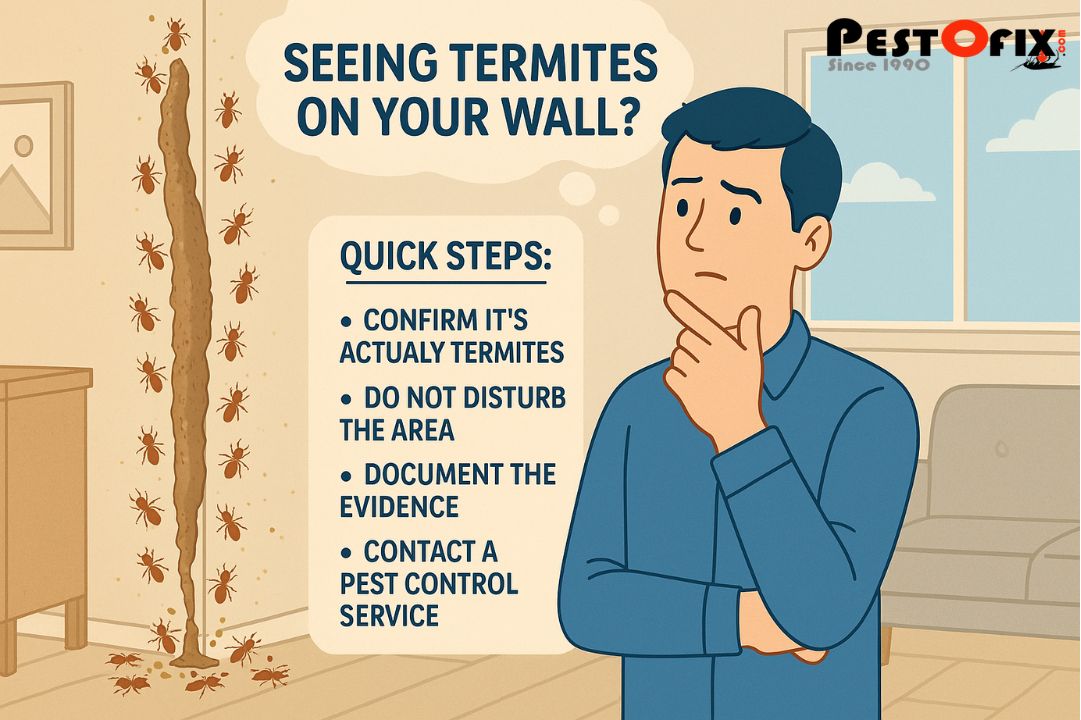
Not all tiny insects on your wall are termites. First, confirm that you're dealing with termites by checking for:
- Winged insects: Termite swarmers (reproductives) often appear near light sources or windows.
- Discarded wings: Found near doors, windowsills, or vents.
- Mud tubes: Pencil-thin tunnels running along walls or foundations.
- Hollow-sounding wood: Tap the area—termites eat wood from the inside out.
2. Do Not Disturb the Area
While your first instinct might be to kill the termites or knock down the mud tubes, disturbing them can cause the colony to spread further.
- Avoid spraying chemicals randomly—it can scatter the colony.
- Do not drill holes or tear open the wall.
- Leave the area untouched so professionals can assess it properly.
3. Document the Evidence
Take photos and videos of the termites and any visible signs like mud tubes or frass (termite droppings). This helps pest control experts evaluate the severity of the infestation before arriving on-site.
- Capture clear, close-up shots of termites or damage.
- Note the time, location, and frequency of sightings.
4. Inspect Nearby Areas
Once you've seen termites in one area, it's likely they’re elsewhere. Check:
- Baseboards and corners of rooms for mud tubes or discoloration.
- Attics, basements, and crawl spaces for signs of wood damage.
- Furniture near the walls—termites can migrate to wooden items.
5. Contact a Professional Pest Control Service
This is not a DIY job. Professional termite exterminators use advanced tools like infrared sensors and moisture meters to locate nests inside walls. They’ll provide:
- Thorough inspection of the infestation.
- Treatment options like baiting systems, liquid barriers, or fumigation.
- Long-term monitoring and prevention strategies.
6. Take Preventive Steps for the Future
After treatment, keeping termites away is critical. Prevention includes:
- Fixing any leaks or moisture issues in walls and ceilings.
- Keeping wood, cardboard, and paper away from walls and floors.
- Scheduling annual termite inspections.
- Ensuring that wood structures are treated and sealed properly.
Conclusion
Seeing termites on your wall is a serious warning sign—but don’t panic. With the right steps, you can stop the damage in its tracks and protect your home from future infestations. Start by identifying the problem, avoiding DIY mistakes, and getting in touch with a trusted pest control service. Remember, acting swiftly can save you from costly repairs and structural issues down the road.